
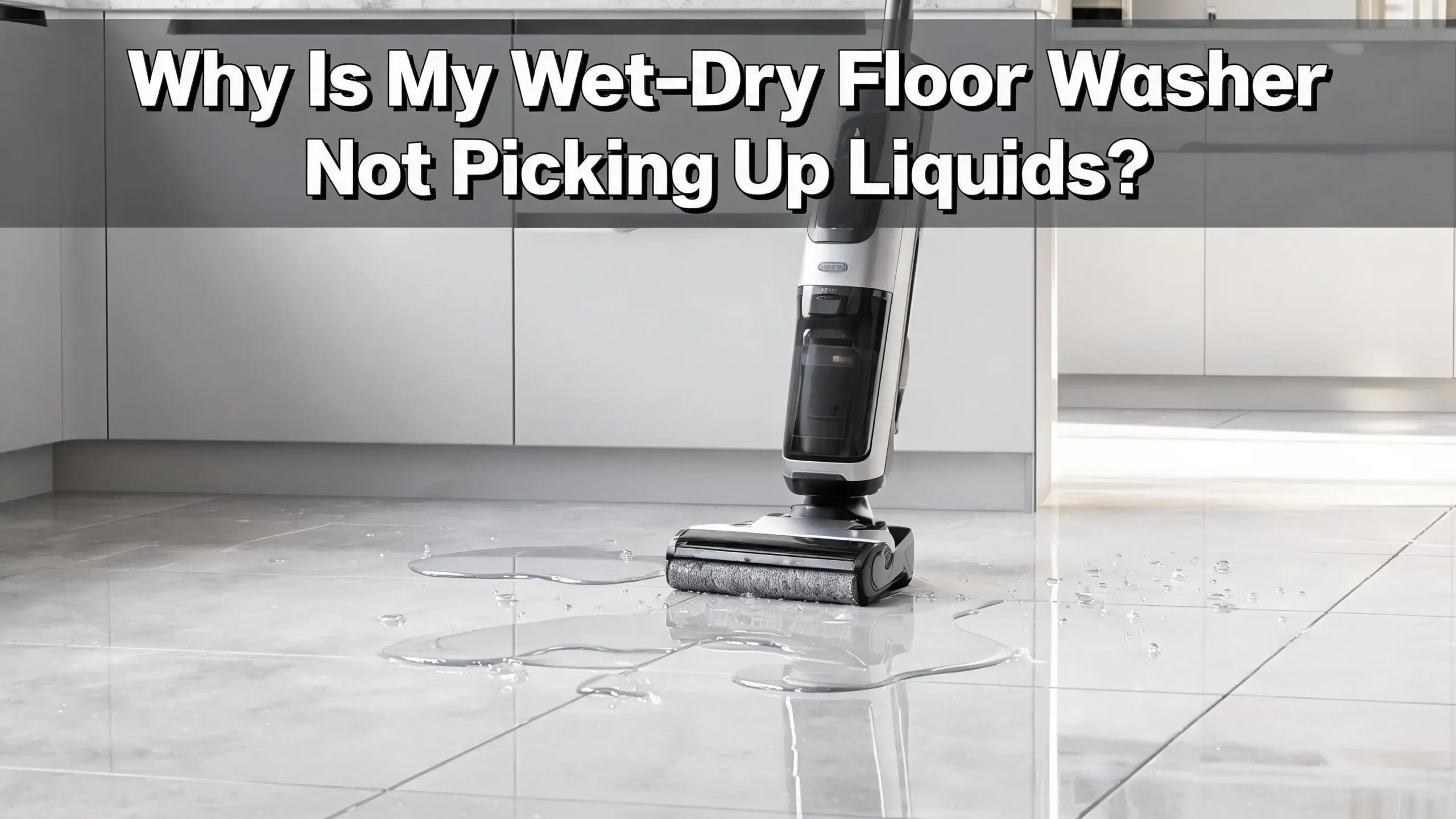
Why Is My Wet Dry Floor Washer Not Picking Up Liquids?
You just finished mopping, but the floor still looks like a swamp. Your wet dry floor washer hums along, sprays water everywhere, yet refuses to suck a single drop back up. Frustrating, right? You bought this machine to make life easier, not to leave puddles behind.
The good news is that most suction problems have simple causes. A clogged filter, a full tank, or a worn squeegee can stop your machine from doing its job. You don’t need a technician for most of these fixes. You need the right checklist and a few minutes of patience.
This guide walks you through every common reason your floor washer stops picking up liquids. Each section gives you clear steps you can follow today. Let’s get your floors dry and your machine working like new.
Key Takeaways
- Check the dirty water tank first. A full tank or a misaligned tank lid is the most common reason your machine stops sucking up water. Empty it and reseat it firmly.
- Clean the filters after every use. A clogged HEPA filter or float filter blocks airflow and kills suction power within minutes.
- Inspect the brush roller and suction channel. Hair, lint, and food crumbs trap themselves inside the suction path and stop liquids from reaching the tank.
- Run the self clean cycle every time. Skipping this step lets dirty water dry inside the hoses, which causes long term suction loss and bad smells.
- Look at the squeegee or scraper strip. A worn or bent squeegee leaves streaks and stops the machine from collecting water properly.
- Charge the battery fully. Low power reduces suction strength on cordless models, even if the machine still turns on.
Check If the Dirty Water Tank Is Full
The dirty water tank is the first place to look. Most wet dry floor washers have a float sensor inside the tank. When the water level reaches the top, the sensor cuts suction to protect the motor. You may still hear the machine running, but no water enters the tank.
Pop the tank out and check the water level. If it sits near the maximum line, empty it into a sink. Rinse the inside with warm water to remove sludge. Pay attention to the mesh strainer at the top of the tank, since hair and debris collect there fast.
Reinstall the tank and press down firmly until it clicks. A loose tank breaks the air seal, and no seal means no suction. Check the rubber gasket around the lid for cracks or twists. A damaged gasket lets air escape and stops liquids from rising into the chamber.
Run the machine again on a small puddle of clean water. If suction returns, you found the problem. If not, move to the next step. Always empty the dirty water tank after every cleaning session, even if it looks half full. Standing dirty water grows bacteria and clogs sensors over time.
Inspect and Clean the Filters
Filters are the silent killers of suction power. Your floor washer likely has two filters: a HEPA filter on top of the dirty water tank and a float filter inside the tank. Both need regular cleaning to work properly.
Remove the HEPA filter by twisting or pulling it out, depending on your model. Hold it under running water and rinse until the water runs clear. Never scrub it with soap or a brush, since this damages the fine fibers. Let it air dry for at least 24 hours before putting it back. A wet filter blocks airflow even worse than a dirty one.
Check the float filter, which looks like a small plastic cage with a ball inside. Make sure the ball moves freely. If it sticks, gunk has built up around it. Rinse it under warm water and shake out the debris. A stuck float ball tricks the machine into thinking the tank is full, which shuts off suction.
If your filter looks discolored or torn, replace it. Most brands sell replacement filters separately. Cleaning filters every two to three uses keeps your machine strong and prevents long term motor damage.
Look for Clogs in the Suction Pathway
Hair, pet fur, and food crumbs love to hide inside the suction channel. This narrow tube runs from the brush head up to the dirty water tank. When it clogs, water has nowhere to go and stays on your floor.
Flip the machine over and remove the brush roller. Most rollers twist out or pop free with a button press. Look inside the empty slot with a flashlight. You will often see a tangled mess of hair wrapped around the inlet. Pull it out with your fingers or a pair of tweezers.
Next, check the clear plastic suction tube that connects the brush area to the tank. Some models let you detach this tube for cleaning. Run warm water through it until it flows freely. A bent paperclip or a long pipe cleaner helps push out stubborn blockages.
Reassemble everything and test the machine on water. Clogged suction pathways are the second most common cause of pickup problems, right after full tanks. Make this check a weekly habit if you have pets or long hair in the house. A two minute clean saves hours of frustration later.
Examine the Brush Roller for Damage
The brush roller does two jobs at once. It scrubs your floor and pushes dirty water into the suction inlet. When the roller wears out or gets tangled, water never reaches the suction zone in the first place.
Pull the brush roller out and look at the bristles. Healthy bristles stand up straight and feel firm. Flattened, matted, or missing bristles mean it’s time to clean or replace the roller. Hair wrapped tightly around the ends stops it from spinning freely, which kills water pickup.
Rinse the roller under warm water and use scissors to cut away any wrapped hair. Squeeze out the excess water and let it air dry overnight. Putting a wet roller back into the machine creates mold and bad smells. Some brands recommend replacing the roller every six months to a year.
Spin the roller by hand before reinstalling it. It should turn smoothly with no grinding. If you feel resistance, check the drive shaft for debris. A stuck roller forces the motor to work harder and reduces suction power. Replace the roller if cleaning doesn’t restore smooth rotation.
Check the Squeegee or Scraper Strip
Some wet dry floor washers use a rubber squeegee or scraper strip near the suction inlet. This thin strip presses against the floor and channels water into the suction port. When it bends, cracks, or collects gunk, water slips past instead of going up.
Locate the squeegee on the underside of the cleaner head. Run your finger along the edge and feel for nicks or hard spots. A smooth, flexible squeegee works best. Wipe it clean with a damp cloth to remove dried detergent and hair.
If the squeegee looks warped or torn, order a replacement from the manufacturer. Squeegees are cheap and easy to swap, usually held in place by clips or a single screw. A worn squeegee leaves streaks of dirty water behind even when the rest of the machine works fine.
Adjust the squeegee position if your model allows it. The strip should touch the floor evenly across its full width. Uneven contact means one side picks up water while the other leaves puddles. Test on a small spill after each adjustment until the floor dries behind the machine.
Make Sure the Clean Water Tank Is Sealed
This may sound strange, but a leaking clean water tank can cause suction problems too. If the clean tank doesn’t seal properly, water drips onto the floor faster than the dirty tank can collect it. The result looks like the machine isn’t picking up liquid, when really it’s releasing too much.
Remove the clean water tank and check the cap. Tighten it until it clicks or stops turning. Look for hairline cracks in the plastic, especially around threaded areas. Even a tiny crack lets water leak under pressure.
Inspect the rubber valve at the bottom of the tank. This valve opens when the tank locks into the machine. If the valve sticks open, water flows out constantly. Press it gently with a fingertip to check for smooth movement.
Refill the tank with the recommended amount of water and detergent. Using too much detergent creates foam, which trips the float sensor and stops suction. Stick to the measuring cap that came with your machine. If your model uses tap water, consider distilled water in hard water areas to prevent mineral buildup inside the tank and hoses.
Run the Self Cleaning Cycle
Most modern wet dry floor washers come with a self cleaning function. This cycle flushes clean water through the brush roller, hoses, and suction path. It washes away soap residue, hair, and dried dirt that build up after each use.
Place the machine on its charging dock or cleaning tray. Fill the clean water tank with fresh water only, no detergent. Press the self clean button and let the cycle run for the full duration, usually two to five minutes. Don’t interrupt the cycle midway, since this leaves dirty water inside the system.
After the cycle finishes, empty the dirty water tank and rinse it. Remove the brush roller and stand it upright to dry. Leaving it inside the wet machine causes mildew and weakens the bristles.
Skipping self cleaning is the number one reason floor washers lose suction over time. Dried detergent forms a sticky film inside the hoses, which narrows the passage and kills airflow. Run the self clean cycle after every single use, not just once a week. Your machine will thank you with strong suction for years.
Charge the Battery Fully
Cordless wet dry floor washers rely on battery power for suction. As the battery drains, the motor slows down. You might see the machine still moving the brush, but the suction has dropped to nothing. This often happens when the battery sits below 20 percent.
Place the machine on its charging dock and wait for a full charge. Most models take three to four hours to charge completely. Check the indicator lights or app, if your model has one, to confirm the battery is full.
If the battery drains faster than it used to, it may be wearing out. Lithium ion batteries typically last two to three years with daily use. Replacement batteries are available for most major brands, though some require professional installation.
Try cleaning a small area right after a full charge. Strong suction at the start that fades quickly points to a tired battery. Avoid leaving the machine on the charger 24/7, since constant trickle charging shortens battery life. Charge it after each use and unplug once full.
Look for Air Leaks in the System
Suction depends on a sealed system. Air leaks anywhere in the path break the vacuum and stop water pickup. Common leak points include the tank lids, gaskets, hoses, and brush head connections.
Run your finger around each rubber gasket while the machine runs. You should feel firm contact with no gaps. If you feel air moving past, the gasket needs cleaning or replacement. Pull each gasket out, wipe it down, and check for cracks.
Listen for hissing sounds during operation. A high pitched whistle usually means air is escaping somewhere it shouldn’t. Trace the sound back to its source and inspect that area closely. Most leaks happen at the dirty water tank lid or the connection between the brush head and the main body.
Petroleum jelly applied lightly to gaskets helps restore a tight seal. Don’t use silicone spray or oil, which can damage rubber over time. Replace gaskets every year or two as part of normal maintenance. A well sealed machine pulls water up effortlessly and dries floors in a single pass.
Empty and Reset the Float Sensor
The float sensor protects the motor from water damage. When it gets stuck in the up position, the machine thinks the tank is full and shuts off suction. This happens after using too much detergent, foamy cleaners, or hot water.
Open the dirty water tank and find the float, which is usually a small plastic ball or disc inside a cage. Push it down with your finger and let it spring back. It should move freely with no resistance. If it sticks, soak the entire float assembly in warm water for ten minutes.
Avoid using foam producing cleaners in your floor washer. Regular dish soap, laundry detergent, and pet shampoo create bubbles that trip the float sensor instantly. Only use cleaning solutions labeled for wet dry vacuums or floor washers.
After cleaning the float, dry it with a soft cloth before reassembly. A working float should rattle gently when you shake the empty tank. If it makes no sound, it may be stuck inside the housing. Some models let you remove and replace the float assembly. Check your manual for specific instructions.
Check the Detergent Mix and Water Type
The wrong cleaning solution causes more problems than people realize. Thick, sticky, or highly concentrated detergents leave residue inside the machine. This residue clogs filters, jams the float, and reduces suction over time.
Read your manual to find the recommended detergent. Most brands sell their own formula designed for low foam and easy rinsing. Generic floor cleaners often contain waxes and fragrances that build up inside the system.
Measure your detergent carefully. Too much creates foam that fools the float sensor. Too little leaves floors sticky, which makes the brush roller drag and reduces suction. Follow the cap markings or use a measuring spoon.
Hard water also causes long term issues. Mineral deposits coat the inside of hoses and narrow the suction path. If you live in a hard water area, switch to distilled or filtered water for both cleaning and self cleaning cycles. This single change extends the life of your machine by years and keeps suction strong.
When to Contact Customer Support
Sometimes the problem goes beyond simple maintenance. If you’ve tried every step above and your machine still won’t pick up liquids, it may have an internal fault. The suction motor, control board, or wiring could be damaged.
Check your warranty before paying for repairs. Most wet dry floor washers come with a one or two year warranty that covers motor and electrical failures. Keep your purchase receipt and serial number ready when you call.
Describe the problem clearly. Mention every step you’ve tried, including filter cleaning, self cleaning cycles, and tank inspections. This helps the support agent rule out simple fixes and speeds up the diagnosis.
If the warranty has expired, ask for a repair quote before agreeing to anything. Sometimes a new machine costs less than the repair, especially for older models. Customer support can also tell you if your model has known issues and whether a free fix or replacement is available. Don’t throw away a broken machine without asking first.
Frequently Asked Questions
How often should I clean my wet dry floor washer?
Clean the dirty water tank, filters, and brush roller after every single use. Run the self clean cycle each time you finish mopping. Do a deep clean of all removable parts once a week. This routine prevents most suction problems before they start.
Can I use vinegar in my wet dry floor washer?
Some brands allow diluted white vinegar for descaling, but many warn against it. Vinegar can damage rubber gaskets and void your warranty. Check your manual first. If allowed, use a one to ten ratio of vinegar to water and only during self cleaning cycles.
Why does my floor washer leave streaks even when picking up water?
Streaks usually point to a worn squeegee or dirty brush roller. Inspect both parts and clean or replace them. Streaks can also come from using too much detergent, which leaves a sticky film behind.
How long should the battery last on a cordless model?
A fully charged battery typically runs 25 to 40 minutes of continuous cleaning. If yours dies in under 15 minutes, the battery is wearing out. Most lithium ion batteries last two to three years with daily use.
Is it safe to vacuum up large spills with a floor washer?
Most wet dry floor washers handle small to medium spills well. Large puddles can overwhelm the suction and overflow the tank. For spills larger than a cup, soak up the excess with a towel first, then run the machine to finish the job.

Hi, I’m Ivy! I’m a smart home enthusiast and self-proclaimed clean freak who loves testing the latest cleaning tech so you don’t have to waste your money on the wrong one. I started HomeTechClean to share honest reviews and practical advice for anyone who wants a cleaner home with less effort.