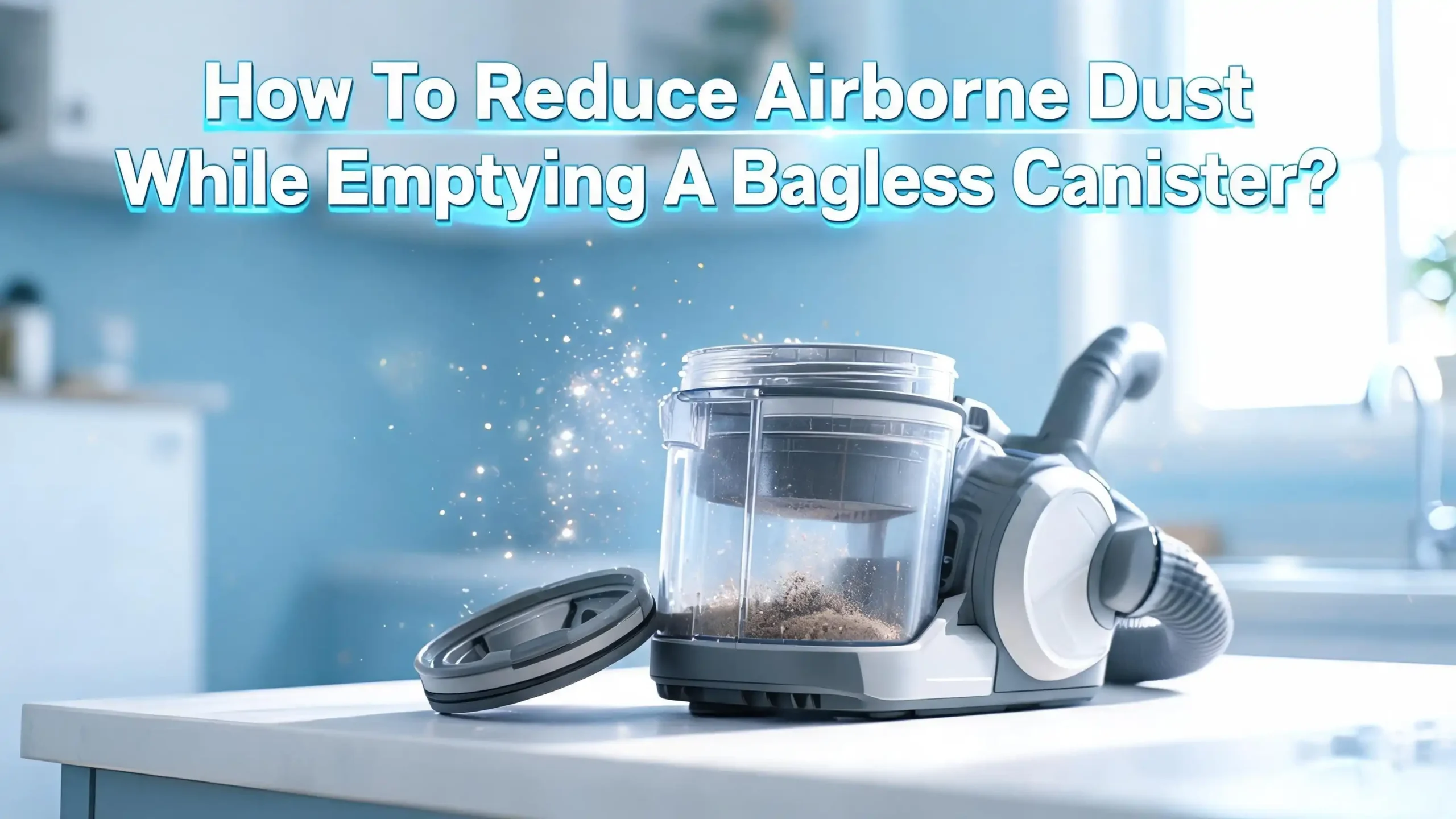
How to Reduce Airborne Dust While Emptying a Bagless Canister?
Fine dust particles from vacuum canisters contain allergens like dust mites, pet dander, pollen, mold spores, and even traces of chemicals from household products.
The good news? You do not have to accept that dust cloud as a fact of life. There are simple, practical steps you can take right now to reduce or even eliminate airborne dust during the emptying process.
This guide walks you through 15 tested solutions that real users and cleaning professionals swear by. Whether you prefer a quick fix or a long term strategy, you will find something here that works for your situation.
Key Takeaways
- Empty your canister outdoors whenever possible. This single habit prevents the vast majority of dust particles from re entering your living space. Stand upwind so the dust blows away from you rather than into your face.
- Use a plastic bag or paper bag as a containment shield. Place the bag over the canister opening before you release the dust. This traps the cloud inside the bag instead of releasing it into the air around you.
- Never let the canister fill past the maximum line. An overfilled canister creates more pressure and more dust escape during emptying. Empty it when the debris reaches about two thirds full for the cleanest results.
- Wear a dust mask or N95 respirator during emptying. Even with the best techniques, some fine particles will escape. A mask protects your lungs from the smallest and most harmful particles that stay airborne the longest.
- Clean or replace your vacuum filters regularly. Clogged filters reduce suction and allow more fine dust to accumulate loosely in the canister, making the emptying process messier.
- Consider the “mist and dump” method. A light spray of water into the canister before emptying weighs down fine particles and prevents them from becoming airborne. This is one of the simplest and most effective tricks available.
Why Bagless Canisters Create So Much Airborne Dust
Bagless vacuum cleaners use cyclonic force to separate dirt and debris from the air stream. The heavier particles drop into the collection cup while the air exits through filters and out the exhaust. This system works well during vacuuming, but the problem starts the moment you open the canister.
The dust inside a bagless canister is not packed tightly like it would be in a sealed bag. It sits loosely in the cup, and the finest particles rest on top or cling to the walls. The simple act of removing the lid or pressing the release button disturbs this settled dust. Air rushes in and fine particles launch into the room.
Fine particulate matter, often called PM2.5, is especially problematic. These particles are smaller than 2.5 microns in diameter and can travel deep into your lungs. Vacuum dust contains skin cells, dust mite waste, bacteria, pollen, and microscopic fibers from carpets and clothing. When released during emptying, these particles can stay suspended in the air for hours.
The Environmental Protection Agency has linked long term exposure to fine particulate matter with chronic bronchitis, aggravated asthma, and other serious respiratory conditions. Understanding this risk is the first step in solving the problem.
Empty the Canister Outdoors Every Time
The single most effective way to reduce indoor airborne dust is to take the canister outside before you open it. This keeps all the escaped particles out of your living space entirely. Your home stays clean and your indoor air quality stays protected.
Walk to your outdoor trash bin with the sealed canister. Position yourself so the wind blows away from you. Then open the release mechanism and dump the contents directly into the bin. If there is no wind, simply hold your breath during the quick dump and step away before breathing in.
Many allergy sufferers and professional cleaners consider this the number one rule for bagless vacuum maintenance. It requires no extra supplies and no special technique. The fresh outdoor air disperses the dust particles quickly so they do not concentrate around you.
If you live in an apartment without easy outdoor access, a balcony works. You can also use a hallway trash room if you can bring the canister there before opening it. The key principle is simple: put distance between the dust release point and your breathing space.
Use a Bag Over the Canister Opening
This method is a favorite among cleaning professionals and allergy sensitive households. Before you release the dust from the canister, place a plastic grocery bag, garbage bag, or paper bag over the entire opening.
Here is how it works step by step. Hold the bag firmly around the canister so there are no gaps between the bag and the canister body. Use a rubber band or your free hand to create a seal. Then press the release button or open the lid while the bag is still in place. The dust falls into the bag instead of the air.
Once the dust has dropped, carefully twist the top of the bag closed while it is still attached to the canister. Then remove the bag and tie it shut. You now have a contained package of dust that you can throw away without any airborne particles escaping.
This technique mimics the sealed disposal system of bagged vacuums. It adds about 30 seconds to the emptying process but eliminates nearly all of the dust cloud. Keep a small stash of bags near your vacuum so you always have one ready.
Mist the Dust with Water Before Dumping
Adding a small amount of moisture to the canister contents is one of the most effective dust suppression methods available. Water droplets bind to fine dust particles and make them too heavy to become airborne. This is the same principle used in industrial dust control on construction sites.
Grab a spray bottle filled with plain water. Give the contents of the canister three to five light sprays before you open it for dumping. You do not need to soak the dust. A fine mist is enough to weigh down the particles that would otherwise float into the air.
Some users pour a small splash of water directly into the canister. This works well too, but be careful not to use so much water that it creates mud or clogs the canister mechanism. A tablespoon or two of water is plenty for most standard sized canisters.
After misting, wait about 10 seconds for the moisture to settle through the dust. Then empty the canister as you normally would. You will notice an immediate difference. The dust drops straight down instead of puffing up in a cloud. Just make sure to dry the canister completely before reattaching it to your vacuum.
Do Not Overfill the Dust Canister
Overfilling your canister is one of the most common reasons for excessive dust clouds during emptying. When dust is packed to the brim, there is no room for it to fall cleanly out of the container. Instead, it gets pushed and compressed, and fine particles shoot out the moment the seal is broken.
Most manufacturers mark a “max fill” line on the canister. But for the cleanest emptying experience, you should dump the canister when it reaches about two thirds of its capacity. This gives the dust enough room to slide out in a controlled manner.
Emptying more frequently also improves your vacuum’s suction power. A full canister restricts airflow, which means your vacuum picks up less dirt and pushes more fine particles through the exhaust. You end up with dirtier floors and dirtier air at the same time.
Make it a habit to check the canister level before and after each vacuuming session. If you have pets or a large household, you may need to empty the canister after every use. This small change in routine reduces dust exposure significantly and keeps your vacuum running at peak performance.
Wear a Dust Mask During the Process
Even with the best containment techniques, some fine particles will escape during emptying. An inexpensive dust mask or N95 respirator provides a critical last line of defense for your lungs. This is especially important if you have asthma, allergies, or any respiratory sensitivity.
N95 masks filter out at least 95% of airborne particles, including the ultra fine dust that causes the most harm. Standard paper dust masks offer less protection but are still far better than breathing unfiltered air during the emptying process.
Keep a mask stored with your vacuum supplies so it is always within reach. Put it on before you touch the canister and leave it on until you have finished emptying, cleaning, and reassembling the unit. This takes the worry out of the process completely.
For people with severe dust allergies, consider having someone else in the household handle the emptying task. If that is not possible, combining a mask with the outdoor emptying method and the bag containment method creates a triple layer of protection that minimizes exposure to near zero.
Clean the Filters on a Regular Schedule
Dirty filters are a hidden cause of dusty canister emptying. When your vacuum’s filters are clogged, the cyclonic separation system cannot work properly. More fine dust ends up loose in the canister instead of being captured by the filters. This means more airborne particles during emptying.
Check your vacuum’s user manual for the recommended filter cleaning schedule. Most manufacturers suggest cleaning washable filters every one to three months and replacing disposable filters every six to twelve months. If you vacuum frequently or have pets, clean them more often.
To clean a washable filter, remove it from the vacuum and tap it gently against the inside of a trash bin to dislodge loose dust. Then rinse it under cool running water until the water runs clear. Let the filter dry completely for at least 24 hours before reinstalling it. A damp filter can grow mold and damage your vacuum’s motor.
HEPA filters deserve special attention. These filters capture 99.97% of particles as small as 0.3 microns. But they lose effectiveness as they fill up with trapped debris. Replacing HEPA filters on schedule is one of the best investments you can make in your home’s air quality.
Choose the Right Location Inside If You Cannot Go Outside
Sometimes weather, mobility issues, or apartment living make outdoor emptying impossible. In these cases, pick the best indoor location to minimize dust spread through your home.
A bathroom with tile floors and a closeable door is ideal. The hard floor is easy to wipe down afterward, and closing the door prevents dust from drifting into other rooms. Turn off any fans or air conditioning vents in the room before you start. Moving air scatters dust particles and carries them farther from the source.
Another option is to empty the canister directly over a kitchen trash bin with a lid. Press the canister as close to the bottom of the bin as possible before releasing the dust. The walls of the bin act as a barrier that catches escaping particles. Close the lid immediately after emptying.
Avoid emptying the canister in carpeted rooms, bedrooms, or living areas where people spend the most time. These rooms trap dust in fabric and fibers, making it harder to clean up afterward. Whatever indoor location you choose, wipe down the surrounding surfaces with a damp cloth after you finish to capture any settled dust.
Slow Down the Release Instead of Quick Dumping
Many people open the canister release and flip it upside down in one fast motion. This creates a sudden burst of air pressure that launches dust particles everywhere. A slower, more controlled release dramatically reduces the dust cloud.
Instead of flipping the canister quickly, tilt it at a gentle angle over your trash bin. Let gravity pull the debris out gradually rather than forcing it out all at once. If your canister has a bottom release door, open it slowly and let the contents slide out under their own weight.
For canisters with compacted dust, use a long handled brush or stick to gently loosen the contents from inside the cup. Avoid shaking or banging the canister against the bin. Each impact sends a fresh plume of fine dust into the air.
Patience during this step takes only an extra 15 to 20 seconds but makes a noticeable difference in air quality. Combined with the bag method or the misting method, a slow release can virtually eliminate the visible dust cloud.
Use a Damp Paper Towel to Wipe the Inside
After dumping the bulk of the dust, a thin layer of fine particles always remains stuck to the canister walls. This residual dust becomes airborne the next time you use your vacuum or the next time you open the canister. Wiping it away breaks this cycle.
Dampen a paper towel or cloth with plain water. Reach inside the canister and wipe the walls, the bottom, and the area around the release mechanism. Pay special attention to the edges where dust tends to pack into seams and grooves.
This step takes less than a minute and removes the fine particles that are most likely to become airborne later. It also prevents dust buildup from reducing your canister’s effective capacity over time.
Let the canister air dry for a few minutes before reattaching it to the vacuum. If you are in a hurry, a quick wipe with a dry paper towel after the damp wipe speeds up the drying process. This simple maintenance habit keeps your vacuum cleaner and your air cleaner.
Consider a Canister Liner or Disposable Insert
Some vacuum owners use thin disposable liners inside their bagless canisters. These liners catch the dust during vacuuming so you can lift the entire liner out and seal it shut without exposing the dust to the air. Think of it as giving your bagless vacuum the convenience of a bagged system.
Thin plastic bags, small trash can liners, or even produce bags from the grocery store can work as makeshift canister liners. Cut or fold the bag to fit inside the canister and secure the edges around the rim. Make sure the liner does not block the airflow inlet or interfere with the cyclone mechanism.
Not every vacuum model is compatible with this approach. Some canisters are too narrow or have internal structures that prevent a liner from sitting properly. Test the liner with a short vacuuming session first to make sure your vacuum maintains normal suction before committing to this method.
For compatible models, this is one of the cleanest emptying solutions available. You simply pull out the liner, twist it shut, and toss it. No dust cloud, no mess, and no extra cleanup required.
Run an Air Purifier Near the Emptying Area
If you empty your canister indoors regularly, a nearby air purifier with a HEPA filter can capture the fine particles that escape during the process. This acts as a safety net for your indoor air quality.
Turn the air purifier on a few minutes before you start the emptying process. Position it within a few feet of your emptying location so it can begin pulling in particles immediately. Leave it running for at least 15 to 20 minutes after you finish to clear any lingering airborne dust.
Air purifiers with true HEPA filtration capture 99.97% of particles down to 0.3 microns. This includes the ultra fine dust mite waste, pollen fragments, and bacteria that pose the greatest health risk. An air purifier does not replace good emptying technique, but it adds a valuable layer of protection.
This is especially helpful in homes where someone has chronic allergies or respiratory conditions. The air purifier handles the inevitable small amount of dust that escapes even when you use the best containment methods.
Avoid Emptying Near Air Vents or Open Windows
Air movement is the enemy of dust containment. A gentle breeze from an open window or a running HVAC vent can scatter dust particles across an entire room in seconds. This turns a small, contained dust release into a whole house air quality problem.
Before you empty the canister, turn off ceiling fans, close nearby windows, and check that HVAC vents in the room are not blowing air. Even a light draft from under a door can carry fine particles out of the room and into hallways or adjacent living spaces.
This tip is easy to overlook but makes a significant difference. Many people empty their canister near a kitchen window for convenience, not realizing that the cross breeze is spreading dust throughout the home. Choose a still, enclosed space for the best results.
After emptying, you can reopen windows and turn on ventilation to flush the room with fresh air. But during the actual emptying process, calm air keeps dust particles concentrated near the source where your containment methods can capture them.
Check and Maintain Canister Seals and Gaskets
Over time, the rubber seals and gaskets on your canister lid and release mechanism wear down. Cracked, compressed, or missing seals allow dust to leak out every time you handle the canister, even before you open it for emptying.
Inspect the seals on your canister every few months. Look for cracks, permanent deformation, or areas where the seal no longer makes firm contact with the canister body. If you see light through the seal when the canister is closed, dust is escaping through that gap during normal vacuuming.
Most vacuum manufacturers sell replacement seals and gaskets for their models. Replacing a worn seal is inexpensive and takes only a few minutes, but it can dramatically reduce the amount of loose fine dust inside the canister. Better seals mean cleaner cyclonic separation, less dust residue, and a much easier emptying process.
While you are inspecting seals, also check the canister itself for cracks or warping. Plastic canisters can develop hairline fractures from repeated use and impact. These tiny cracks become pathways for fine dust to escape into your home’s air.
Think About Switching to a Sealed Bagged System for Allergy Relief
If airborne dust from canister emptying is a constant battle in your household, it may be worth considering whether a bagged vacuum better suits your needs. Modern bagged vacuums with sealed systems and HEPA filtration virtually eliminate dust exposure during disposal.
Bagged vacuums trap dust inside a sealed bag that closes automatically when you remove it. You never see or breathe the dust you have collected. Independent lab tests have shown that top sealed bagged systems retain 99.99% of collected particles, compared to significantly higher particle escape rates from bagless models.
This does not mean bagless vacuums are bad. They remain excellent choices for many households and budgets. But if someone in your home has severe asthma, dust mite allergies, or chronic respiratory illness, the dust exposure from canister emptying adds up over time.
You can also use a hybrid approach. Keep your bagless vacuum for daily quick cleanups and use a sealed bagged vacuum for deep cleaning sessions. This gives you the convenience of bagless for light jobs and the health protection of bagged for heavy duty cleaning.
Frequently Asked Questions
How often should I empty a bagless vacuum canister?
Empty the canister when it reaches about two thirds of the maximum fill line. For most households, this means emptying after every one to two vacuuming sessions. Homes with pets, children, or heavy foot traffic may need to empty after every use. An overfilled canister reduces suction power and creates larger dust clouds during emptying. Frequent emptying keeps your vacuum running efficiently and reduces the amount of loose fine dust that escapes into the air.
Can I wash my bagless vacuum canister with water?
Yes, most bagless canisters can be rinsed with warm water. Remove the canister from the vacuum and rinse it under a faucet to remove stuck on dust and debris. Do not use soap or harsh chemicals, as residue can affect your vacuum’s performance. The critical step is allowing the canister to dry completely before reattaching it. A wet canister can cause mold growth, damage the motor, or create clumps that clog the system during your next vacuuming session. Allow at least 24 hours of air drying.
Is the dust from a bagless vacuum dangerous to my health?
Vacuum dust contains a mix of allergens and irritants including dust mite waste, pet dander, pollen, mold spores, bacteria, and microscopic fibers. Fine particles smaller than 2.5 microns can penetrate deep into the lungs. Long term exposure has been linked to chronic respiratory conditions, aggravated asthma, and allergic reactions. People with existing respiratory conditions, young children, and elderly family members face the greatest risk. Using proper containment methods during emptying significantly reduces this exposure.
Does wearing a regular cloth mask help during canister emptying?
A cloth mask provides some protection, but it is far less effective than an N95 respirator for filtering fine vacuum dust. Cloth masks block larger particles but allow many particles smaller than 10 microns to pass through. If you are using a cloth mask because it is all you have, it is still better than no protection at all. For the best defense, use an N95 or KN95 mask that creates a tight seal around your nose and mouth and filters at least 95% of airborne particles.
What is the best time of day to empty a bagless canister?
There is no scientifically ideal time, but emptying the canister right before you leave the house gives any escaped indoor dust time to settle before you return. If you empty outdoors, the time of day matters less since the particles disperse in open air. Avoid emptying the canister right before bedtime in a room near your sleeping area, as settled dust can become airborne again with any movement and affect your sleep quality.
Can I use a second vacuum to clean up dust from the first vacuum’s emptying?
This might sound excessive, but it actually works well in specific situations. If you spill dust during the emptying process, a handheld vacuum or stick vacuum can quickly capture the settled particles before they become airborne again. Wiping the area with a damp cloth first and then vacuuming catches both the visible debris and the fine dust that clings to surfaces. This two step cleanup is especially useful for people who must empty their canister indoors regularly.

Hi, I’m Ivy! I’m a smart home enthusiast and self-proclaimed clean freak who loves testing the latest cleaning tech so you don’t have to waste your money on the wrong one. I started HomeTechClean to share honest reviews and practical advice for anyone who wants a cleaner home with less effort.