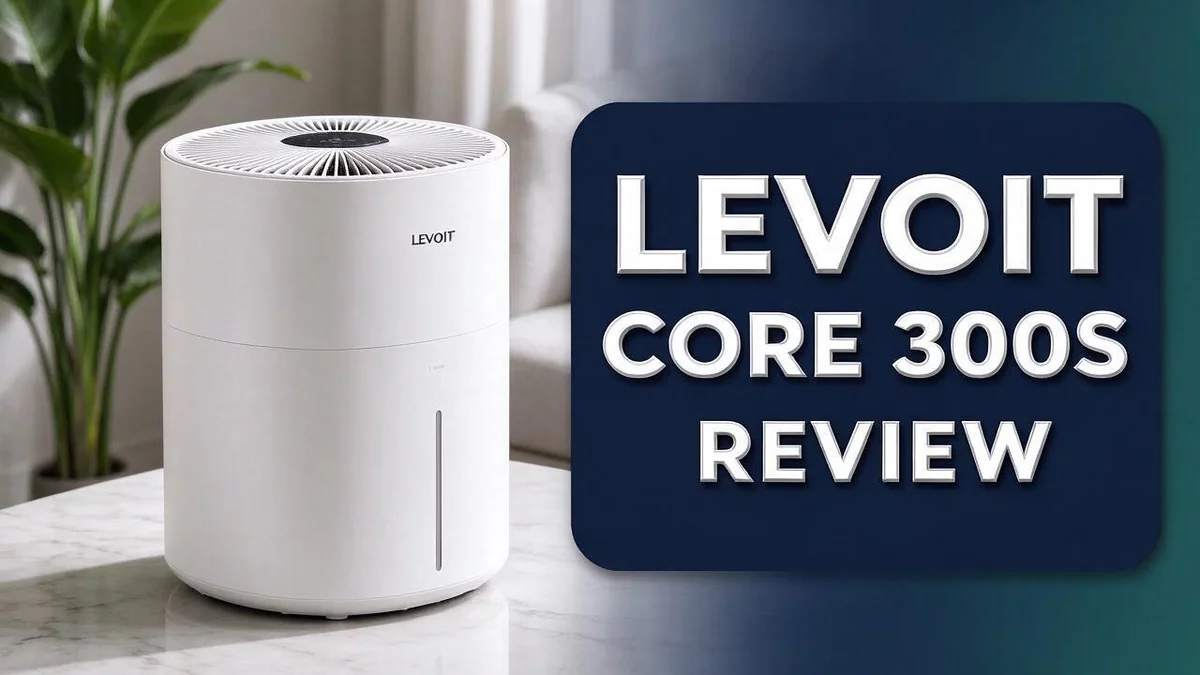
Levoit Core 300S Review: Is This Compact Smart Air Purifier Worth It?
Are you looking for a cleaner, fresher space at home? The Levoit Core 300S could be the air purifier you need. This compact unit fits easily on a desk, nightstand, or small bedroom floor.
Small rooms need clean air too. This model uses a True HEPA filter that captures tiny particles like dust, pollen, and pet dander. It covers rooms up to 219 sq ft, so most bedrooms and home offices get solid coverage.
Here is what makes it stand out. A laser air quality sensor tracks particles in real time. You can control it with the VeSync app, Alexa, or Google Assistant. It also produces no ozone, so the air stays safe to breathe.
In this review, we look at performance, noise, smart features, and how it compares to its rivals. Let’s see if the Core 300S earns a spot in your home.
In a Nutshell
-
Best fit for one small room: The Levoit Core 300S covers spaces up to 219 square feet. It suits bedrooms, nurseries, and home offices well.
-
A sensor that reads the air well: A laser sensor tracks tiny particles. It reads air quality more accurately than many gas or infrared sensors in similar compact units.
-
Zero ozone output: This purifier produces no ozone. You can run it day and night with complete peace of mind.
-
Control from anywhere: The VeSync app, Alexa, and Google Assistant all work with this model. Hands-free commands make daily use simple.
-
A clear step up: The better motor and extra smart features set it apart from the older Core 300. It feels like a real improvement, not a minor refresh.
-
Trade-offs to know: It runs louder than the Vital 100S at every fan speed. Large rooms may also get less airflow than some rivals deliver.
Filtration and Room Coverage

Last update on 2026-11-22 / Affiliate links / Images from Amazon Product Advertising API
Filtration is where the Levoit Core 300S does its main work. The True HEPA filter pulls particles out of the air as it passes through. Dust, pollen, and pet hair are common targets.
A True HEPA standard means the filter catches at least 99.97 percent of particles sized 0.3 microns. A pre-filter catches larger debris first. This helps the main filter last longer between changes.
Room coverage is rated at 219 square feet. That equals about 20 square meters. Measure your room first, so you know if the unit fits your space.
Larger rooms need more airflow to clean the full area. The research points to a lower clean air delivery rate than some rivals. Open plan areas may need a stronger model.
Placement changes results a lot. Keep the unit a few feet away from walls and furniture. Close doors and windows so clean air stays inside the room.
The Shark NeverChange HP152 is rated up to 150 square feet. That gives the Core 300S a slight edge on paper for room size. Still, real results depend on airflow and room layout.
Dust builds up quickly in rooms with pets or carpets. Run the unit on a higher fan speed after cleaning. Then drop to a lower setting for steady daily use.
People with allergies may notice fewer sneezes in a small, closed room. Results vary from person to person. Give the unit a week to show change.
Check the filter often. A clogged filter slows airflow and reduces cleaning power. Set a reminder so you never forget. Clean filters keep your room fresh over time.
Dreo and Xiaomi models offer different trade-offs in coverage and sound. They may suit larger spaces with different needs. Compare the rated area before you pick a model.
In short, the Core 300S suits one small room with strong filtration. Match the room size to the rated area, then place the unit with care. Your air will feel cleaner and fresher.
Air Quality Sensing
The air quality sensor does more than sit on the machine. It reads the room all day long. Here is how that helps you.
The sensor gives live feedback. A display shows the reading, so you see changes as they happen. You never have to guess when a room feels stuffy.
Auto mode responds to these readings. The unit adjusts fan speed based on what the sensor picks up. Cooking smoke or dust from outdoor shoes can trigger a faster pace.
Placement matters a lot for accurate readings. Set the unit a few feet from walls and away from the stove. Keep it clear of curtains and direct heat.
Particle sensing has a clear limit. The sensor tracks particles, so it reads dust, pollen, and smoke well. It does not measure every gas or odor in the room.
Treat the number as a guide, not a final verdict. A low reading means fewer particles at that moment. Check it at different times to spot patterns.
Pets and cooking create sudden spikes. Morning breakfast or evening trips from outside show up fast. Watching these bumps helps you decide when to run the purifier on higher speed.
Track trends for a clearer picture. Note when readings climb after vacuuming or making the bed. Over a week, these notes reveal which habits add dust to the room.
Give the sensor a few days before you judge it. Early readings may swing as the unit settles into your room. Steady patterns tell the real story.
Compare readings with your own senses. A room that smells fine may still show higher particle counts. A room that looks clean may still hold fine dust. Use both signals together.
Keep the sensor area clean too. Dust around the vents can affect how air flows past the sensor over time. Gently dust the area every few weeks.
Good readings lead to better choices. You can open windows on clear days and run the purifier when the number climbs. That simple routine keeps the room fresher all week.
Noise and Fan Speeds
Fan speed shapes how the Levoit Core 300S sounds. Many buyers judge a purifier by its noise first. The fan setting you choose plays the biggest role in that sound.
Lower speeds keep the room calm. They suit reading, working, or watching TV. The air moves slowly, so the sound stays soft.
Higher speeds clean the air faster. They help right after cooking or cleaning. Expect more fan noise at these settings.
Sleep mode suits bedrooms well. It keeps the fan at a gentle pace all night. Many people find it easy to live with.
Auto mode changes the noise level often. The unit raises or lowers its fan speed based on the air quality sensor. Some people like this. Others prefer a fixed speed for steady sound.
Room size changes how sound feels. Small rooms let the hum bounce off walls. Hard floors can add vibration.
A rug or mat under the unit can soften that vibration. Keep the purifier away from the bed or desk edge too.
A dirty filter can raise the noise. The fan works harder to pull air through a clogged filter. Swap the filter on time to keep the motor relaxed.
Test each speed before you commit. Run every setting for a few minutes in your own space. Listen from the spot where you sit or sleep. Your ears will tell you more than any chart can. Start on a low setting. Move up only when you need faster cleaning.
Night noise deserves extra attention. Quiet sounds stand out after dark. A steady hum can feel louder when the house is quiet.
Pets may also react to fan sounds. Some animals sleep better with a calm, low setting. Watch how your pet behaves during the first few nights. A low setting may suit them best.
Write down what works for you. Note the speed, the time, and how the room felt. Patterns often show up within a week.
Good sleep and calm focus both start with the right speed.
Top 3 Alternatives
Coway Airmega 400S

- [Coverage] Designed to clean spaces up to 3,120 sq. ft. in 60 minutes
- [HyperCaptive Filtration System] Combination of a pre-filter, active carbon filter, and HEPA Filter...

Last update on 2026-11-22 / Affiliate links / Images from Amazon Product Advertising API
This model suits large rooms and open living spaces. It uses a True HEPA filter and a carbon layer to trap dust, smoke, and odors. Its smart sensors adjust the fan speed on their own. The unit runs quietly on low settings, so it works well in bedrooms and home offices.
Blueair Blue Pure 211+

- Powerful Air Purifier for Large Rooms:** The Blue Pure 211i Max cleans up to 674 sq ft in just...
- HEPASilent Filtration for Pets, Allergens & Smoke:** Blueair's HEPASilent dual filtration...
Last update on 2026-11-22 / Affiliate links / Images from Amazon Product Advertising API
This option fits medium rooms well. It has a simple design that blends into most home decor. The filter captures fine particles and helps reduce allergens in the air. Setup takes only a few minutes, and the filters are easy to swap.
Winix AM90

- 𝐀𝐇𝐀𝐌 𝐕𝐞𝐫𝐢𝐟𝐢𝐝𝐞 𝐚𝐭 𝟑𝟔𝟎 𝐬𝐪 𝐟𝐭.: Also...
- 𝐓𝐡𝐞 𝐒𝐦𝐚𝐫𝐭𝐞𝐫 𝐀𝐢𝐫 𝐏𝐮𝐫𝐢𝐟𝐢𝐞𝐫: Control and...
Last update on 2026-11-22 / Affiliate links / Images from Amazon Product Advertising API
This compact purifier works best in small rooms or home offices. It offers a True HEPA filter plus an activated carbon layer. Its control panel is easy to read, and the air quality indicator responds quickly to changes. Many people choose it for its clean look and simple daily use.
Setup and Smart Control
Setting up the Levoit Core 300S takes only a few minutes. Plug in the unit and download the VeSync app. Then create an account and follow the steps shown in the app.
The app asks you to connect the purifier to your home network. Your phone and the purifier must join the same WiFi network. Most setups use the 2.4 GHz band, so check your router settings first if pairing fails.
Once paired, the device appears in your app list. You can rename it, such as “Bedroom” or “Office.” This small step helps you manage several units in one home.
Smart control gives you more freedom than a simple on and off switch. You can check the purifier from work or while traveling. Quick taps in the app show the power status and the current mode.
Voice control adds another layer of ease. Link the purifier with Alexa or Google Assistant through the app settings. Then you can say a short command to turn it on, turn it off, or change the fan level.
Voice commands work best when the unit stays in range of your router. Give each device a clear name so the assistant understands you. Names like “bedroom purifier” avoid confusion with lights or fans.
Scheduling is another useful feature. You can set timers in the app so the purifier runs before you wake up or after you return home. Timers save energy and keep the air fresh without extra effort.
Firmware updates arrive through the app. Keep the app updated and install new versions when prompted. Updates can improve connectivity and add features over time.
If the connection drops, restart the purifier and your router first. Then open the app and check that your phone still has internet access. Most problems clear up after a quick reboot.
Guests may also want control. You can share access with other household members through the app. Everyone then sees the same status and settings.
Pros and Cons
Pros
-
- Laser sensor reads particles more accurately than gas or infrared sensors in similar small units.
-
- True HEPA filter traps fine particles in small rooms.
-
- The unit produces no ozone, so the air stays clean.
-
- It offers a clear upgrade over the Core 300 with a stronger motor.
-
- Smart features like the VeSync app add useful control for daily use.
Cons
-
- It runs louder than the Vital 100S at every fan speed.
-
- Its clean air delivery rate trails some rivals in larger rooms.
-
- It works best only in small spaces up to 219 sq ft.
Who Should Buy It
The Levoit Core 300S suits a few specific buyers best. Think about your room size and daily habits first.
Renters who live in studio apartments often find this unit a practical choice. It moves easily from room to room.
Students in dorm rooms also benefit. The compact body fits on a desk, shelf, or nightstand without taking up much space.
Parents with a nursery or toddler’s room may like the small footprint. Place it away from the crib so it stays out of reach.
Remote workers spend long hours in one room. A compact purifier suits that setup well.
Couples in small apartments can move one unit between rooms. Carrying it takes little effort.
People with mild dust or pollen concerns can use it in a bedroom or home office.
Daily particles tend to build up in these spaces. A steady filter helps keep the air fresher.
Pet owners often notice extra fur and odor in shared spaces. This compact unit can help in one room where the pet rests most.
Anyone who wants a practical starter unit for one small room can consider this model.
Skip this model if your space is large.
Open plan living rooms need more airflow than this unit can supply. A bigger purifier will serve those rooms better.
Shoppers who want near silent operation should compare other options. Some rivals run quieter, though they may move less air.
Busy households with several rooms may need more than one unit. Plan ahead for a whole home setup so every main room gets fresh air.
Look at your daily routine before you decide. Think about how many hours you spend in the room. Long hours make cleaner air more valuable.
Match the unit to the room you use most often. That choice matters more than any single feature on the box.
Ask yourself one simple question. Do you need clean air in one small room?
If yes, this model deserves a close look.
Final Verdict
The Levoit Core 300S earns a spot on your shortlist. It does one job well. It cleans small rooms with steady results.
Think of this unit as a focused tool, not a whole-home solution. Its best work happens in spaces up to 219 square feet.
Go for it if your room is compact. A studio, a dorm room, or a home office fits its strengths. Measure your floor space first.
Noise matters more than many buyers expect. If you sleep near the unit, test the fan speeds in person. Quiet nights count for a lot.
Compare a few options before you commit. If quiet operation sits at the top of your list, Dreo models run more softly. They deliver less clean air per minute, though.
Xiaomi’s Smart Air Purifier 4 Compact is another option. It also offers app control in a small footprint.
Smart features add real convenience. Still, many buyers only need a basic machine. Be honest about how you will use the app each day.
Placement also shapes results. Keep the unit away from walls and curtains so air flows freely. Good airflow helps it reach the whole room.
Filter care keeps performance steady. Check the filter on a regular schedule. Replace it when the app or your routine signals it is time.
Our overall take is positive. The Core 300S offers accurate sensing and ozone free output. It also brings a stronger motor than its predecessor. These strengths suit everyday needs in small spaces.
Keep your expectations realistic. It will not replace a large commercial unit. It will keep a small bedroom or office noticeably fresher.
Final recommendation: buy it for one small room. Match the room size, check the noise level, and plan where it will sit. Then you can breathe easier with confidence.
Frequently Asked Questions
Can the Levoit Core 300S help with allergies?
It can help reduce dust and pollen in a small room. It does not treat allergies, though. For the best comfort, pair it with regular dusting and vacuuming.
Can I control it with my voice?
Yes, it works with Alexa and Google Assistant. You can check settings or adjust the unit without touching it. This is handy when your hands are busy or you are across the room.
Is it a good choice for a bedroom at night?
Many people use it in bedrooms. Switch to a lower fan speed at night so the room stays calm while you sleep. Keep the unit a few feet from your bed for the most comfortable experience.
Where should I place it for the best results?
Keep it away from walls, curtains, and furniture so air can move freely. Set it near the spot where you spend the most time. Avoid tucking it into a corner, since this can block airflow.
How do I keep it working well over time?
Check the filter on a regular basis. Replace the filter when the app or the unit signals that it is time. Wipe the outside of the unit with a soft, dry cloth to keep dust from building up.

Hi, I’m Ivy! I’m a smart home enthusiast and self-proclaimed clean freak who loves testing the latest cleaning tech so you don’t have to waste your money on the wrong one. I started HomeTechClean to share honest reviews and practical advice for anyone who wants a cleaner home with less effort.