How To Safely Splice A Cut Cord On A Traditional Vacuum Cleaner?
A cut or damaged vacuum cleaner cord can stop your cleaning routine in its tracks. Maybe your pet chewed through the wire. Maybe you accidentally ran the vacuum over its own cord. Or perhaps years of use finally wore through the outer sheathing. Whatever the cause, you are now staring at a severed power cord and wondering if your vacuum is finished.
The good news is that you do not need to throw away your vacuum. A cut cord is one of the most common vacuum cleaner repairs, and you can fix it yourself at home with a few basic tools and the right technique.
This guide walks you through every step of the process. You will learn how to assess the damage, choose the right splice method, prepare the wires, make a secure connection, and insulate everything properly.
By the end, your vacuum will work just as well as it did before the cord was cut. Every technique here prioritizes your safety first and gives you a repair that will hold up over time.
Key Takeaways
- Always unplug your vacuum before starting any cord repair. This sounds obvious, but it is the single most important safety rule. Working on a plugged in cord can deliver a fatal shock.
- A proper splice requires a mechanical connection, not just electrical tape. Tape alone will eventually unravel and leave exposed wires. You need soldered joints, butt splice connectors, or wire nuts to create a connection that stays secure under the stress of regular vacuuming.
- Match your wire gauge exactly. Most traditional vacuum cleaners use 16 or 18 gauge wire. Using wire that is too thin for the amperage your vacuum draws can create a fire hazard. Always check your vacuum’s specifications before purchasing replacement wire.
- Heat shrink tubing is your best friend for insulation. It provides a tight, permanent seal over each individual wire connection and over the entire splice area. A heat gun or even a hair dryer can shrink the tubing into place.
- Know your limits and stay honest about your skill level. If you have never worked with electrical wiring before, consider taking your vacuum to a repair shop. A professional cord replacement usually costs under $30 and eliminates the risk of a bad splice.
- Test your repair before regular use. After completing the splice, run the vacuum for several minutes and feel the repaired area. If it gets warm or hot, turn off the vacuum immediately and redo the splice or seek professional help.
Why Vacuum Cleaner Cords Get Damaged In The First Place
Understanding the cause of cord damage helps you prevent it from happening again. The most common reason is running the vacuum over its own cord. The aggressive brush roller on the bottom of a vacuum cleaner can slice through the outer sheathing and even cut into the copper wires inside. This happens quickly and sometimes without the user noticing right away.
Cord stretching is another frequent cause. People often try to reach every corner of a room without unplugging and moving to a closer outlet. This pulls the cord tight and can cause the internal wires to break loose from their connections. Over time, this weakens the cord at the points of greatest stress, usually near the plug end or where the cord enters the vacuum body.
Pet damage is surprisingly common. Vacuum repair shops report receiving several vacuums per month with cords that have been chewed by dogs or cats. Some pets develop a strong dislike of the vacuum and will attack the cord when the machine is left out. If you own pets, store your vacuum in a closed closet or room after every use.
Improper cord winding also contributes to long term damage. Coiling the cord while it is still plugged into the wall causes the internal wires to twist and eventually break. The correct method is to unplug the cord first, then coil it starting from the vacuum body side. This lets the plug end spin freely and prevents internal twisting.
Assessing The Damage Before You Start
Before you pick up any tools, you need to evaluate the full extent of the cord damage. A clean cut is the easiest type of damage to repair. If the cord was sliced in one spot by the brush roller or cut cleanly by an object, you have two good ends of wire to work with.
Look closely at both sides of the cut. Check whether the copper wires inside are still bright and shiny or if they appear blackened or corroded. Discolored copper is a sign of heat damage, which means the cord may have been arcing before it was fully severed. If you see blackened wire, cut back further until you reach clean, bright copper.
Also check the length of cord remaining on both sides of the cut. You need at least six inches of workable cord on each side to make a proper splice. If the cut happened very close to the plug or very close to where the cord enters the vacuum body, you may be better off replacing the entire cord rather than splicing it.
Run your fingers along the full length of the cord to feel for any other areas of damage. A cord that has been run over once may have been run over in other spots too. Look for soft spots, exposed wires, or sections where the outer sheathing feels thin. Repair all damaged areas at the same time, or replace the cord entirely if you find multiple problem spots.
Tools And Materials You Will Need
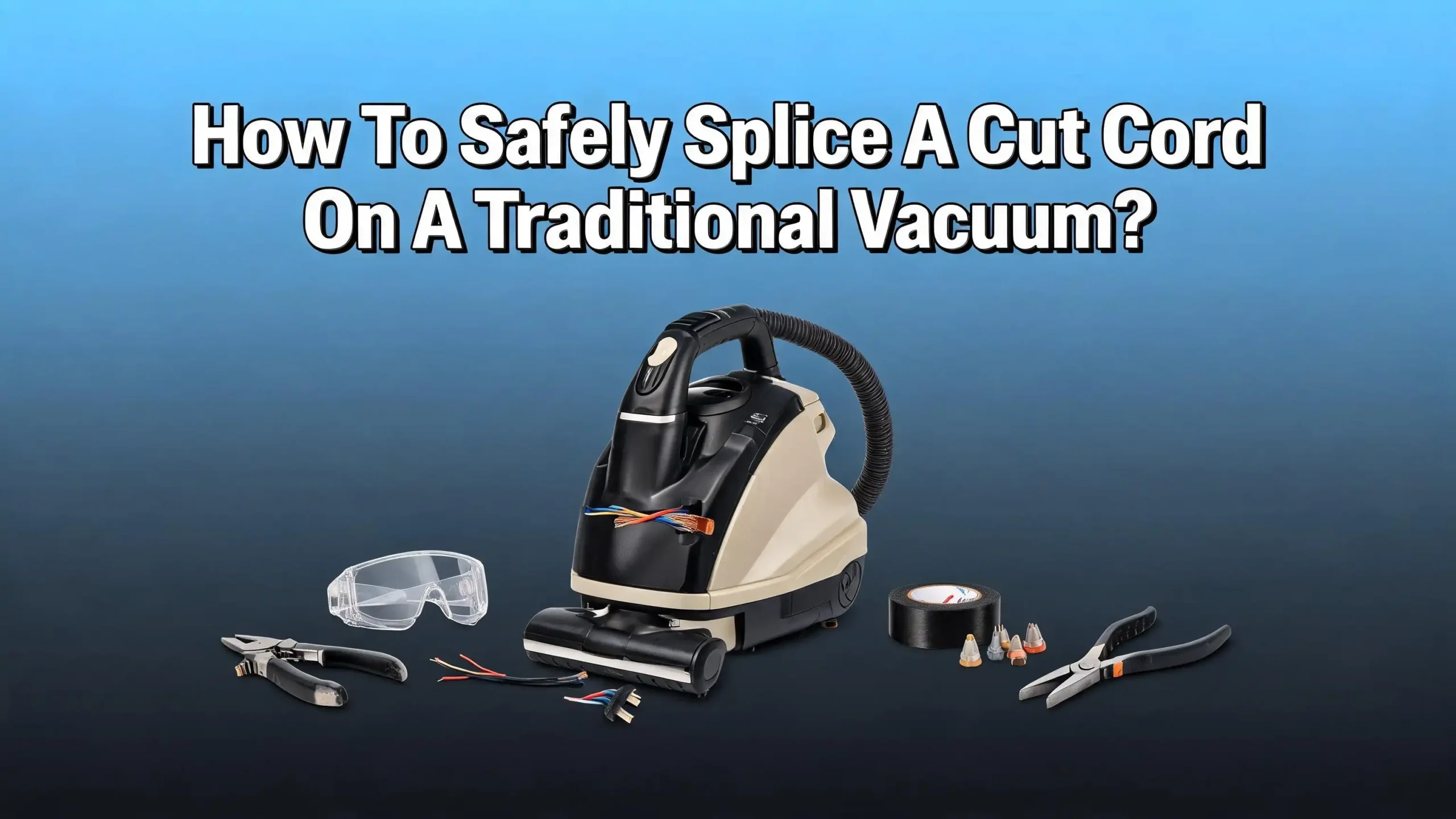
Gathering the right tools before you begin saves time and ensures a safe result. Here is what you need for a proper vacuum cord splice. A wire stripper is essential for removing insulation from the individual wires without nicking the copper underneath. Do not use a knife or scissors for this step because they can cut through the thin copper strands.
You will need butt splice connectors or a soldering iron with rosin core solder. Butt splice connectors are small metal tubes with insulation that crimp over two wire ends to join them. They are available at any hardware store. If you prefer soldering, a 25 to 40 watt soldering iron works well for this gauge of wire.
Heat shrink tubing in at least two sizes is important. You need smaller diameter tubing to cover each individual wire connection and a larger diameter piece to cover the entire repaired section. Choose tubing with a 2:1 or 3:1 shrink ratio for the best fit. A heat gun shrinks the tubing, but a hair dryer on high heat can work in a pinch.
A wire crimping tool is necessary if you are using butt splice connectors. A good crimper creates a solid mechanical connection that will not pull apart. You also need electrical tape as a secondary layer of insulation, a utility knife for cutting the outer cord sheathing, and a multimeter to test your connections after the splice is complete.
Preparing The Wire Ends For Splicing
Proper wire preparation is the foundation of a safe and lasting splice. Start by cutting cleanly through both ends of the cord at the damage site. Use sharp wire cutters and make a straight, perpendicular cut. Ragged cuts make it harder to strip the insulation and create uneven wire ends.
Next, use your utility knife to carefully slit the outer sheathing of the cord about two inches back from each cut end. Be very gentle with the knife so you do not cut into the insulation of the individual wires inside. Most vacuum cords contain two or three individual wires. A two wire cord has a hot wire (usually black) and a neutral wire (usually white). A three wire cord adds a ground wire (usually green).
Once the outer sheathing is removed, use your wire stripper to remove about half an inch of insulation from each individual wire. Set your wire stripper to the correct gauge to avoid cutting into the copper strands. If you do nick the copper, cut that wire back and strip a fresh section. Even a few broken strands reduce the wire’s ability to carry current safely.
After stripping, inspect each wire end. The copper strands should be bright, clean, and intact. If you are using butt splice connectors, twist each wire end gently in a clockwise direction to keep the strands tidy. If you are soldering, you can tin each wire end by applying a thin layer of solder to prepare them for joining.
Choosing The Right Splice Method
There are three main methods for splicing a vacuum cord, and each has its advantages. Butt splice connectors with crimping is the fastest and most beginner friendly option. You slide the connector over two wire ends and crimp it shut with a crimping tool. This creates a mechanical connection that holds the wires together securely.
Soldering creates the strongest electrical bond between two wires. You twist the wire ends together, apply heat with a soldering iron, and flow solder into the joint. A soldered connection has extremely low electrical resistance, which means less heat buildup during use. The downside is that soldering requires more skill and the right equipment.
The third option is using wire nuts, which are the twist on connectors commonly used in household wiring. Wire nuts work for vacuum cord repairs, but they add bulk to the splice area. This can make the cord stiff at the repair point and may snag during use.
For most home vacuum cord repairs, butt splice connectors with heat shrink tubing provide the best balance of safety, ease, and durability. They require no special skills beyond basic crimping, and they create a connection that meets electrical safety standards. If you have soldering experience, a soldered connection with heat shrink is the gold standard. Avoid relying on electrical tape alone as your primary connection method, as it will loosen and fail over time.
How To Splice Using Butt Splice Connectors
This method is the most straightforward approach for most people. Start by sliding a large piece of heat shrink tubing onto one side of the cord before making any connections. This is a step people often forget, and you cannot slide it on after the wires are joined. Push it far enough away from the work area that it will not shrink from any heat you generate during the process.
Take the first pair of matching wires. In a two wire cord, start with either pair. In a three wire cord, begin with the ground wire (green). Insert one stripped wire end into one side of the butt splice connector until the copper reaches the metal barrel inside. The insulation of the wire should butt up against the connector’s insulation.
Crimp the connector firmly with your crimping tool. Give the wire a gentle tug to make sure it does not pull out. If it moves at all, remove it and try again. A loose connection is a fire hazard. Repeat this process with the matching wire from the other side of the cut cord.
Now do the same for the remaining wire or wires. Make sure you match colors exactly. Black goes to black, white goes to white, and green goes to green. Mixing up hot and neutral wires can damage your vacuum’s motor or create a dangerous situation. After all wires are connected, slide small pieces of heat shrink tubing over each individual connector and shrink them in place.
How To Splice Using The Soldering Method
Soldering provides a permanent, low resistance joint that professionals trust. Begin by sliding your heat shrink tubing onto the cord before making connections, just as with the butt splice method. You need small pieces for each individual wire and one large piece for the entire cord.
Take the first pair of matching wires and overlap the stripped ends. Twist them together firmly in a clockwise direction to create a lineman’s splice or a simple twisted splice. The goal is maximum surface contact between the copper strands of both wires. A tight mechanical twist ensures the joint stays together even before solder is applied.
Heat your soldering iron to operating temperature. Touch the iron to the underside of the twisted wire joint and hold it there for a few seconds. Then apply solder to the top of the joint. The solder should flow down into the wires by capillary action. Do not apply solder directly to the iron tip and try to transfer it to the wire. This creates a cold joint that is weak and has high resistance.
A good solder joint looks smooth and shiny. A dull or lumpy joint indicates a cold solder connection that needs to be redone. Let each joint cool completely before moving on. Then slide the small heat shrink tubing over each soldered joint and shrink it tight. Repeat for all remaining wire pairs. Once all connections are insulated individually, slide the large heat shrink tubing over the entire repair area and shrink it in place.
Insulating Your Splice Properly
Insulation is what keeps your splice safe for long term use. Each individual wire connection must be insulated separately before the outer insulation is applied. This prevents the hot and neutral wires from touching each other, which would cause a short circuit.
If you used butt splice connectors, the connectors themselves provide some insulation. Adding heat shrink tubing over each connector gives a second layer of protection. For soldered connections, heat shrink tubing is absolutely essential because the exposed solder joint conducts electricity.
Choose heat shrink tubing that fits snugly after shrinking. Measure the diameter of the wire and select tubing with a shrunken diameter slightly smaller than the wire. This ensures a tight seal. Cut each piece of tubing about one inch longer than the connection it needs to cover. This extra length allows the tubing to overlap onto the good insulation on both sides of the joint.
After insulating each individual wire, apply the large outer piece of heat shrink tubing. This piece should cover the entire splice area and extend at least one inch past the repair on each side. Shrink it slowly and evenly with your heat gun, moving the heat back and forth to prevent overheating any one spot. As a final step, you can wrap the outer heat shrink with a layer of quality electrical tape for extra durability and strain relief. This gives your repair a professional appearance and an extra safety margin.
Testing Your Repair Before Use
Never assume your splice is safe just because it looks good. Testing is a critical step that confirms your connections are solid and your insulation is intact. Start by using a multimeter set to the continuity or resistance setting. Touch the probes to each end of the spliced wire to confirm that electricity can flow through the joint.
Check each wire individually. The hot wire should show continuity from the plug prong to the vacuum’s internal connection point. The neutral wire should do the same. If your vacuum has a three prong plug, test the ground wire as well. Any wire that does not show continuity has a broken or poor connection that needs to be redone.
Next, set your multimeter to check for shorts between the wires. Place one probe on the hot wire and the other on the neutral wire. Your multimeter should show no continuity, meaning the wires are properly insulated from each other. If you get a continuity reading between the two wires, your insulation has failed somewhere and you need to take the splice apart and redo it.
After passing these tests, plug in your vacuum and run it for three to five minutes. Then unplug it and immediately feel the splice area with your hand. It should feel the same temperature as the rest of the cord. Any warmth or heat at the splice point indicates a high resistance connection that could be a fire hazard. Turn off the vacuum and redo the splice if this happens.
Common Mistakes To Avoid During The Splice
Using electrical tape as your only connection method is the biggest mistake people make. Electrical tape is designed to mark and insulate wires, not to create a mechanical bond. It will loosen over time as the adhesive breaks down, leaving exposed wires and a potential shock hazard. Always use a proper connector or solder joint first, then tape as a secondary measure.
Another common error is mismatching wire gauges. If you need to splice in a new section of wire, it must be the same gauge as the original cord. Most vacuum cleaners use 16 or 18 gauge wire. Using thinner wire creates a bottleneck that will overheat under the vacuum’s power draw. Check the markings printed on the cord’s outer sheathing to identify the gauge.
Forgetting to slide heat shrink tubing onto the cord before making connections is a frustrating mistake that wastes time. Heat shrink tubing must be threaded onto the wire before the splice is made. Once both ends are connected, you cannot pass the tubing over the plug or the vacuum body.
Staggering your splice points is another detail that many people miss. If both wire connections line up side by side, the splice area becomes bulky and the two joints are close enough that insulation failure could cause a short circuit. Cut each wire to a slightly different length so the individual splices sit at different points along the cord. This reduces bulk and adds a margin of safety.
When To Replace The Cord Instead Of Splicing
Splicing works well for a single clean cut, but there are situations where full cord replacement is the better choice. If your cord has multiple damaged spots along its length, splicing each one creates several potential failure points. A new replacement cord eliminates all of those risks at once.
If the cut is within six inches of the plug or the vacuum body, you may not have enough wire to make a proper splice. Short wire ends are difficult to strip and connect securely. In this case, you can sometimes attach a new plug to the shortened cord, but full replacement is often easier and safer.
Cords that show signs of heat damage, melting, or blackened copper should always be replaced entirely. These symptoms indicate that the cord has been carrying too much current or has had a failing connection for some time. The internal damage may extend further than what is visible on the outside.
Many vacuum manufacturers sell replacement cords that are designed for specific models. These cords come with the correct gauge wire, the right plug type, and the proper length. Installation usually requires removing a few screws to open the vacuum’s body, disconnecting the old cord from the internal terminals, and connecting the new one. The process takes about 15 to 20 minutes for most models and is the safest option available.
Safety Precautions Throughout The Entire Process
Keeping yourself safe during the repair is more important than the repair itself. Always unplug the vacuum before you start working. Double check that the plug is out of the wall even if you remember unplugging it earlier. This habit prevents accidental electrocution if someone else plugs the cord in while you are working on it.
Wear safety glasses while cutting, stripping, and soldering wire. Small wire fragments can fly off during cutting, and solder can spit when it first contacts flux. Work in a well ventilated area if you are soldering because the flux in solder produces fumes that can irritate your lungs and eyes.
Use the right tools for each step. A wire stripper is safer and more precise than a knife. A proper crimping tool creates a better connection than pliers. Cutting corners on tools increases the risk of a poor connection and personal injury. If you do not own these tools, most hardware stores sell basic electrical tool kits at a reasonable price.
After the repair is complete, inspect the entire length of the cord one more time before plugging it in. Look for any nicks, cuts, or exposed copper that you might have missed during your initial assessment. Store your vacuum in a dry location and keep the cord away from pets, heavy foot traffic, and sharp objects. Good cord care habits will help prevent future damage and keep your repaired cord working safely for years.
How To Prevent Future Cord Damage On Your Vacuum
Prevention saves you from repeating this repair. Hold the excess cord slack in your hand or loop it over your shoulder while vacuuming. This keeps the cord off the floor and away from the brush roller. It is the single most effective habit for preventing cord damage.
Always unplug by gripping the plug itself, not the cord. Pulling the cord yanks on the internal wires and weakens them over time. This is especially important near the plug end, where repeated stress can cause the wires to break loose from the prongs.
Wind your cord correctly after each use. Unplug the cord from the wall first. Then coil it starting from the vacuum body side and working out to the plug end. This method lets the plug spin freely and prevents the internal wires from twisting. Many vacuums have cord hooks on the body specifically for neat cord storage.
Keep your vacuum stored in a closed space away from pets. Dogs and cats that dislike the vacuum may chew on the cord when you are not around. A chewed cord is a serious safety hazard because the damage may not be immediately visible. Make a habit of inspecting the full length of your cord before each use. A quick visual check takes only a few seconds and can catch developing problems before they turn into a fully severed cord.
Frequently Asked Questions
Can I just wrap a cut vacuum cord with electrical tape?
Electrical tape alone is not a safe permanent fix for a cut vacuum cord. While it can serve as a very temporary measure for minor outer sheathing damage where no copper is exposed, it should never be used as the sole repair method for a fully cut cord. The adhesive on electrical tape breaks down over time, and the tape can unravel. This exposes live wires and creates a shock and fire hazard. A vacuum motor draws significant amperage, and any exposed connection under that load is dangerous. Always use a mechanical connection like butt splice connectors or soldering, then insulate with heat shrink tubing.
What gauge wire do most vacuum cleaners use?
Most traditional vacuum cleaners use 18 gauge wire in a two or three conductor configuration. Some older or commercial grade vacuums may use 16 gauge wire. You can find the wire gauge printed on the outer sheathing of the cord itself. Look for markings like “18/2” (18 gauge, 2 conductors) or “18/3” (18 gauge, 3 conductors). When splicing or replacing wire, always match the original gauge exactly. Using thinner wire can cause overheating because it cannot safely handle the amperage your vacuum draws.
Is it legal to splice a vacuum cleaner cord myself?
In most residential situations, you are allowed to repair your own appliance cords without needing a permit or license. However, the repair must meet basic electrical safety standards. A proper mechanical connection and adequate insulation are expected. That said, some regions have specific codes that discourage or prohibit cord splicing on certain appliances. If you have any doubt, check with your local building code authority or take the vacuum to a certified repair shop.
How long does a properly spliced cord last?
A well executed splice using butt connectors or solder with heat shrink tubing can last as long as the original cord. The key factors are the quality of the mechanical connection, the adequacy of the insulation, and the stresses placed on the cord during use. If you stagger your splice points, use proper gauge wire, and protect the repaired area from strain, the splice will hold up for years of regular vacuuming.
Should I replace the entire cord instead of splicing?
Full cord replacement is always the safest option. If you can find a replacement cord for your vacuum model, it eliminates all risk associated with a splice. Replacement is strongly recommended when there are multiple damaged areas on the cord, when the cut is very close to the plug or vacuum body, or when you see signs of heat damage. Many manufacturers sell replacement cords, and the installation process is straightforward for most traditional vacuum models.
Can I use an extension cord to repair my vacuum’s power cord?
You can use the wire from an extension cord as splice material, but the gauge must match or exceed your vacuum’s original cord gauge. An extension cord rated for 18 gauge or heavier can provide suitable wire. Cut the length you need, strip the individual wires, and splice them in using the methods described in this guide. Do not simply plug your vacuum’s shortened cord into an extension cord as a permanent solution, because this adds a connection point that can loosen and overheat during extended use.

Hi, I’m Ivy! I’m a smart home enthusiast and self-proclaimed clean freak who loves testing the latest cleaning tech so you don’t have to waste your money on the wrong one. I started HomeTechClean to share honest reviews and practical advice for anyone who wants a cleaner home with less effort.