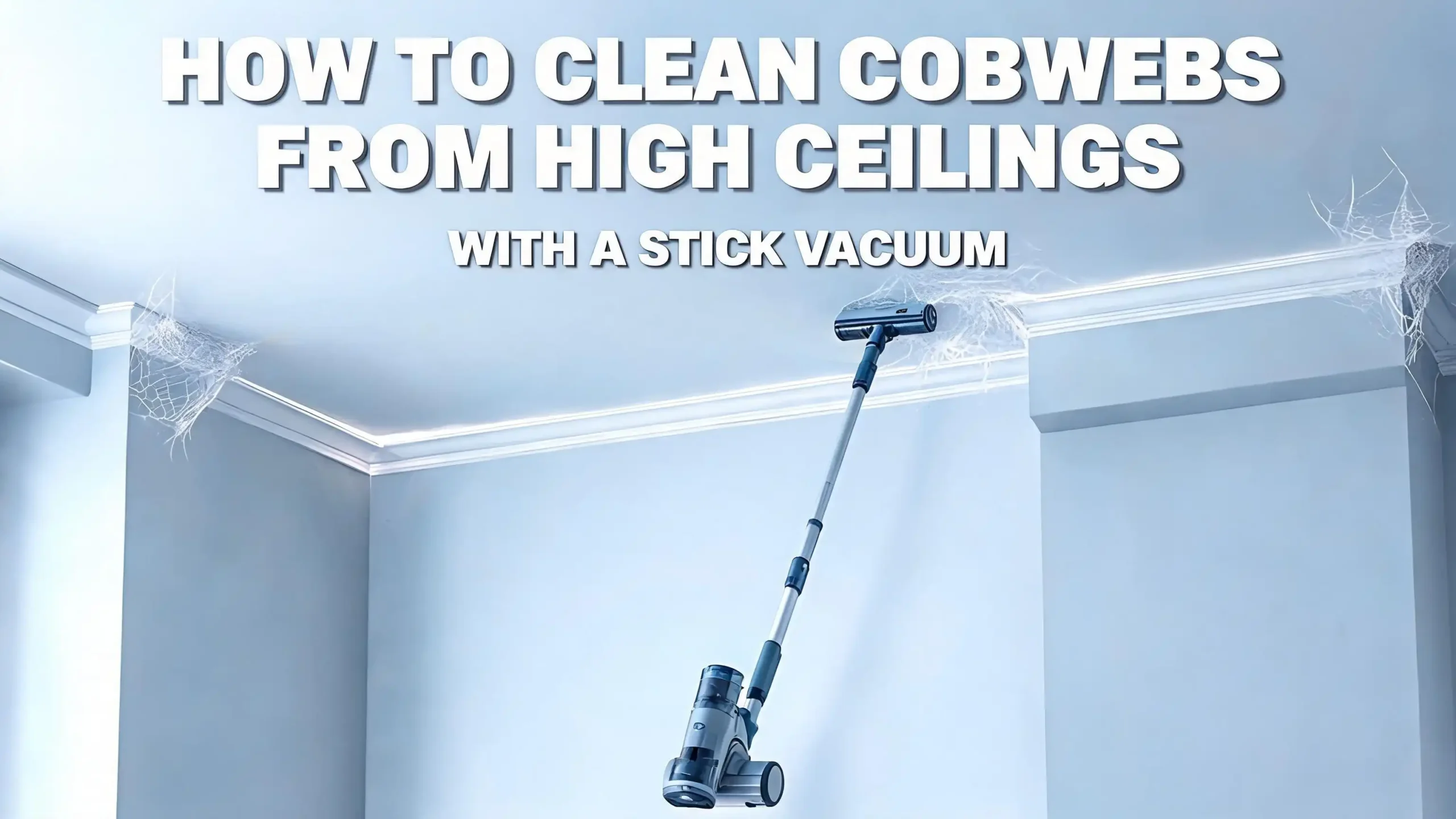
How To Clean Cobwebs From High Ceilings With A Stick Vacuum?
Have you ever looked up at your beautiful high ceiling only to spot those wispy gray cobwebs dangling in the corners? You are not alone. High ceilings add elegance and space to any room, but they also become a magnet for dust, cobwebs, and tiny spiders.
The good news is that you do not need a ladder, a professional cleaning service, or expensive specialty tools to handle this problem. Your trusty stick vacuum can do the job safely and effectively, right from the floor.
This guide will walk you through every step of cleaning cobwebs from high ceilings using a stick vacuum. You will learn preparation tips, the right attachments to use, clever DIY hacks to extend your reach, safety precautions, and long-term prevention strategies. Let us get those ceilings spotless.
Key Takeaways
- Stick vacuums are ideal for high ceiling cobweb removal because they are lightweight, cordless, and easy to lift overhead for extended periods without fatigue.
- Use the right attachment for the job. A crevice tool, soft brush nozzle, or a homemade microfiber extension will trap cobwebs effectively without smearing them across the ceiling paint.
- Work from top to bottom and dry before wet. Always remove dry cobwebs with suction first. Use a damp microfiber cloth only for any leftover sticky residue afterward.
- Safety matters more than speed. Keep both feet on the ground whenever possible. If you must use a small step stool, have someone spot you and never overreach.
- Prevention saves time and effort. Regular dusting, sealing entry points, and using natural spider repellents like peppermint oil spray can reduce how often you need to clean.
Why High Ceilings Attract So Many Cobwebs
Spiders love high ceiling corners for three simple reasons. First, these spots feel safe because humans rarely disturb them. Second, corners offer multiple anchor points for web attachment, making silk construction easy and stable. Third, warm air rises and carries tiny insects upward, which provides a steady food supply for the spiders.
Once a spider abandons its web, the silk strands become sticky traps for floating dust, lint, and pet dander. The web turns from transparent to gray or brown. This is the classic cobweb look that drives homeowners crazy. According to entomologists, if a web looks dusty and abandoned, the spider is already gone. You can remove it without guilt.
Understanding this cycle helps you tackle the problem at its root. You are not just cleaning silk strands. You are removing dust that has accumulated over weeks or months. A stick vacuum captures both the web and the trapped dust in one motion, which is why it works so well for this task.
Pros And Cons Of Using A Stick Vacuum For High Ceilings
A stick vacuum offers clear advantages for overhead cobweb cleaning, but it also has some limits. You should understand both sides before you begin.
Pros
Stick vacuums weigh very little compared to upright or canister models. Most cordless stick vacuums weigh between 3 and 7 pounds. You can hold one overhead for several minutes without straining your arms. The cordless design lets you move freely from room to room without searching for outlets or dragging a cord behind you. Quick grab and go convenience also means you are more likely to clean cobwebs the moment you spot them instead of putting off the task.
Many stick vacuums convert into handheld units. You can detach the main body and attach a crevice tool directly for even lighter overhead work. The suction power on modern stick vacuums has improved greatly. They easily pull in loose cobwebs, dust, and even small spiders without scattering debris around the room.
Cons
Stick vacuums have shorter battery life than you might expect. Most cordless models run for 15 to 40 minutes on a full charge, and using maximum suction mode can cut that time in half. Plan your cleaning session accordingly. The dust bin on a stick vacuum is small. You may need to empty it once or twice if you are cleaning cobwebs throughout a large home.
Reach remains the biggest limit. Most stick vacuum wands extend to about 4 or 5 feet from the floor. With your arm raised, you can reach ceilings up to 9 or 10 feet tall. Anything higher will need an extension hack or an accessory pole. Also, stick vacuums do not perform well on wet or sticky residue. If a cobweb has been painted over or stuck with kitchen grease, you will need to switch to a damp cloth method.
Gathering The Right Tools Before You Start
Preparation makes the difference between a quick clean and a frustrating mess. Before you touch a single cobweb, assemble these items near your work area.
Your stick vacuum is the star of the show. Make sure it is fully charged. Attach the crevice tool for pointed corners or the soft dusting brush for flat ceiling surfaces. The crevice tool concentrates suction into a narrow opening, which grabs webs deep in corners. The soft brush agitates dust loose so the vacuum can pull it in.
Grab a microfiber cloth and a small bowl of warm water with a drop of mild dish soap. This combination handles any sticky residue left behind after vacuuming. Keep a dry microfiber cloth nearby for final buffing. If your ceilings are above 10 feet, you will also need a safe step stool or a lightweight extension pole. A telescopic pole that extends to 12 or 15 feet works wonders when paired with your vacuum attachments.
Protective gear matters. Wear safety glasses or even simple reading glasses to stop falling dust from getting into your eyes. A dust mask helps if you have allergies or asthma. An old baseball cap keeps debris out of your hair. Finally, lay down a drop cloth or old sheet under your work area to catch anything that falls. This simple step saves you from vacuuming the floor twice.
How To Extend Your Stick Vacuum Reach For Extra High Ceilings
Standard stick vacuum wands reach about 4 to 5 feet. Add your arm length and you can access ceilings up to roughly 9 or 10 feet. But what if your ceilings are 12, 14, or even 20 feet high? You need a reach extension strategy.
The simplest method uses a sturdy cardboard tube from a roll of wrapping paper. Slide the tube over the end of your vacuum wand or crevice tool. Secure it with strong duct tape wrapped tightly around the joint. Test the connection by gently tugging. It must feel solid before you raise it overhead. The tube adds 2 to 3 feet of reach. This DIY hack works best for lightweight crevice tools because the cardboard can bend under too much weight.
A better long-term solution is a telescopic extension pole designed for vacuum attachments. These poles thread or clip onto standard vacuum tool ends and extend from 4 feet up to 15 feet or more. They give you professional reach without the cardboard weak point. Some poles even have a slight angle at the head so you can get into corners without contorting your body.
Step By Step Method To Remove Cobwebs With Your Stick Vacuum
Now you are ready to clean. Follow these steps in order for the best results.
Step one: Clear the area below your work zone. Move small furniture, rugs, and decor items out of the way. Lay your drop cloth on the floor. This catches falling dust and any cobweb strands that escape the vacuum.
Step two: Attach your crevice tool or soft brush to the stick vacuum wand. If you need extra reach, connect your extension tube or telescopic pole now. Turn the vacuum on and set it to normal suction mode. Maximum suction is usually unnecessary for lightweight cobwebs and drains your battery faster.
Step three: Start at the highest point in the room. Place the nozzle tip gently against the corner where the wall meets the ceiling. Move slowly along the seam. Let the suction pull the web in rather than scrubbing at the surface. Rushing causes the web to smear or break into pieces that float away.
Step four: Work in sections around the entire room perimeter. After each 3 to 4 feet of cleaning, lower the vacuum and check the nozzle. Remove any tangled web strands from the brush or crevice tip. A clogged nozzle loses suction power fast.
Step five: Once the perimeter is clean, check the center of the ceiling if you have beams, ceiling fans, light fixtures, or vents. These spots also collect cobwebs. Use the soft brush attachment for flat surfaces and the crevice tool for narrow gaps.
Cleaning Cobwebs Around Light Fixtures And Ceiling Fans
Light fixtures and ceiling fans present a special challenge. They gather cobwebs quickly because the warm air around bulbs attracts insects, which in turn attract spiders. You must also be extra careful around electrical fixtures.
Always turn off the ceiling fan and light fixture before you clean near them. Wait for light bulbs to cool down completely. Hot bulbs can melt vacuum attachments or cause burns if you accidentally touch them. For ceiling fan blades, use the soft brush attachment and run it along the top and bottom edge of each blade. Hold the blade steady with your free hand so it does not spin.
For chandeliers and pendant lights, use the crevice tool to gently suck cobwebs from between arms and around bulb bases. Do not press the vacuum nozzle directly against delicate glass or crystal pieces. Keep a small distance and let the airflow do the work. After vacuuming, wipe light fixture surfaces with a dry microfiber cloth to remove any remaining dust film.
Dealing With Stubborn And Sticky Cobwebs
Not all cobwebs lift away with suction alone. Some webs have absorbed moisture from humidity, kitchen grease, or bathroom steam. These become sticky and cling to the wall or ceiling surface. Trying to vacuum them just smears the residue.
For stubborn cobwebs, use a two-step approach. First, vacuum away any loose dust and dry web material around the spot. This exposes the sticky core. Second, dampen a corner of your microfiber cloth with warm water and a tiny drop of mild dish soap. Wrap the damp cloth around the end of your crevice tool or extension pole. Secure it with a rubber band. Gently dab and wipe the sticky spot until the residue lifts.
Follow up immediately with a dry microfiber cloth on the same pole setup. This prevents water marks on your ceiling paint. Work in small sections and rinse your cloth often in clean water. Dirty cloths just spread the grime around instead of removing it.
Pros of the damp cloth method: It removes grease and sticky residues that suction alone cannot handle. You avoid harsh chemical sprays near your face and eyes.
Cons: This method takes more time than dry vacuuming. You must be careful with water amounts because drips can damage flooring or furniture below. Always wring the cloth until it is barely damp, never wet.
How To Clean Cobwebs From Vaulted And Cathedral Ceilings
Vaulted and cathedral ceilings create dramatic architecture but they also create dramatic cobweb problems. The steep angle makes it hard to get a vacuum nozzle flush against the surface. Cobwebs love to gather where the angled ceiling meets the flat wall.
For vaulted ceilings, your best friend is an angled adapter at the end of your extension pole. Many telescopic poles include a pivoting head that locks at different angles. Adjust the head so the vacuum nozzle sits flat against the sloped ceiling surface. Work from the bottom of the slope upward. This prevents dislodged dust from falling onto areas you have already cleaned.
If your vaulted ceiling peak is extremely high, above 16 feet, you may need to combine methods. Use the stick vacuum with the longest extension pole you can safely manage from the floor. For the very peak, a lightweight step ladder placed on a flat, stable surface may be necessary. Always have someone hold the ladder steady. Never stand on the top two rungs.
Avoiding Common Mistakes When Cleaning High Ceilings
Many people make small errors that turn a simple cobweb cleaning into a frustrating or even dangerous task. Learn from these common mistakes so you can avoid them.
The biggest mistake is looking directly up while vacuuming. Dust, web strands, and tiny debris will fall straight into your eyes and mouth. Wear safety glasses and keep your mouth closed. Tilt your head slightly to the side while looking upward to reduce direct fallout into your face.
Another frequent error is pressing the vacuum nozzle too hard against the ceiling. This can leave scuff marks on paint, especially flat or matte finishes. Let the suction do the work. Hold the nozzle a fraction of an inch away from the surface for loose webs. Only make light contact when necessary.
Skipping the drop cloth is a mistake you will regret. Even careful vacuuming lets some debris escape. A drop cloth catches everything and saves you from sweeping or vacuuming the entire floor afterward. Also, do not ignore your vacuum filter. Cobweb dust is fine and powdery. It clogs filters quickly. Check and clean the filter after your session to maintain strong suction for your next use.
How Often Should You Clean High Ceiling Cobwebs
There is no single answer that fits every home. The frequency depends on your local climate, the number of spiders around your property, and how much dust circulates in your indoor air. However, a good general rule is to inspect high ceilings once every two weeks and clean as needed.
Homes in wooded areas or near bodies of water will see more spider activity and will need more frequent cleaning. Homes in dry, dusty climates will notice cobwebs becoming visible faster because dust coats the silk strands quickly. If you run ceiling fans often, the airflow pushes dust into corners and speeds up cobweb formation.
Set a recurring reminder on your phone or calendar. During your biweekly check, walk through each room and look up. Use natural daylight or a bright flashlight aimed at ceiling corners. You will spot cobwebs you might miss under artificial light. Quick action with your stick vacuum takes only a few minutes per room when you stay on top of it.
Natural Prevention Methods To Reduce Cobweb Formation
Cleaning cobwebs feels satisfying, but preventing them saves you even more time. Simple, natural methods can discourage spiders from building webs in your high ceiling corners.
Essential oil sprays work as gentle spider repellents. Mix 10 to 15 drops of peppermint oil, tea tree oil, or citrus oil with water in a spray bottle. Add a teaspoon of mild dish soap to help the oil mix with the water. Spray this solution along ceiling corners, window frames, and door frames once every two weeks. Spiders dislike these strong scents and will choose other locations.
Seal entry points around your home. Check window screens for holes. Apply caulk around gaps where pipes or wires enter the house. Install door sweeps on exterior doors. Fewer entry points means fewer spiders indoors. Also, reduce outdoor lighting near doors and windows. Bright lights attract flying insects, which attract spiders looking for an easy meal.
Keep your home free of clutter, especially in storage areas, basements, and attics. Spiders love undisturbed piles of boxes and old clothes. Regular vacuuming of floors, baseboards, and furniture also removes spider eggs and tiny insects before they become a problem. A clean home simply supports fewer spiders.
When To Call A Professional For High Ceiling Cobweb Removal
Most homeowners can handle routine cobweb cleaning with a stick vacuum and a few accessories. However, some situations call for professional help.
Call a professional if your ceilings are above 20 feet and you do not own or feel comfortable using tall extension poles. Professional cleaners have industrial-grade telescopic poles that reach 30 feet or more.
They also carry proper safety gear and liability insurance. If your cobweb problem is linked to a larger pest infestation, contact a pest control service first. Removing webs without addressing the spider population only gives you a temporary fix.
Homes with ornate crown molding, delicate plasterwork, or historic features also benefit from professional care. Aggressive vacuuming or scrubbing can damage these surfaces. Professionals know how to clean them gently. Finally, if you have physical limitations, balance issues, or a fear of heights, do not risk injury. The cost of a cleaning service is far less than a hospital bill.
FAQs
Can I use any stick vacuum to clean high ceiling cobwebs?
Yes, almost any stick vacuum can handle cobweb removal. The key factors are lightweight design and a crevice tool or dusting brush attachment. Even budget models work well because cobwebs require very little suction power. Cordless models offer more freedom of movement overhead. If your stick vacuum converts to a handheld unit, the reduced weight makes ceiling work even easier.
Will vacuuming cobwebs spread spiders around my house?
No, vacuuming cobwebs does not spread live spiders around your home. Most cobwebs are abandoned, meaning the spider is already gone. If a spider is still present in the web, the vacuum suction pulls it directly into the dust bin. Empty the dust bin outside into a sealed trash bag if this concerns you. The spider will not crawl back out of a sealed vacuum system.
How do I clean cobwebs from textured or popcorn ceilings?
Textured ceilings need extra care because vacuum nozzles can knock off the textured material. Use a soft brush attachment and hold it slightly away from the surface. Let the airflow pull the web in without touching the texture. For stubborn webs on popcorn ceilings, use the damp microfiber cloth method described earlier and work very gently. Never scrub or press hard against a textured ceiling.
Do cobwebs mean I have a spider infestation?
Not necessarily. A few cobwebs in high corners are normal in most homes, especially during late summer and fall when spiders are most active. Cobwebs indicate that a spider once lived there, not that hundreds are currently hiding in your walls. If you see fresh, clean webs appearing daily and spot multiple live spiders, then you may have a larger population. In that case, consult a pest control professional.
Can I use my stick vacuum on outdoor cobwebs too?
Yes, but with limits. A stick vacuum works well on covered porches, patios, and garage ceilings. Avoid using it on wet surfaces or in rainy conditions. Outdoor cobwebs often contain more dirt, pollen, and debris. Empty the dust bin and clean the filter immediately after outdoor use. For exterior walls and high eaves, a corded model or a shop vac with a long extension may work better than a battery-powered stick vacuum.

Hi, I’m Ivy! I’m a smart home enthusiast and self-proclaimed clean freak who loves testing the latest cleaning tech so you don’t have to waste your money on the wrong one. I started HomeTechClean to share honest reviews and practical advice for anyone who wants a cleaner home with less effort.