
Why Does My Vacuum Leave Dirt Behind When Pulled Backwards?
If your vacuum looks strong on the push but leaves crumbs, lint, or dusty lines behind when you pull it back, you are not imagining it. This is a very common cleaning problem.
The good news is that most of these problems are easy to fix at home in a few minutes.
A vacuum should lift dirt on both passes, and many carpet experts say the backward pass often does the deeper cleaning. So if dirt stays on the floor as you pull the machine back, something is blocking good pickup.
This guide gives you clear answers and simple fixes. You will learn what causes the problem, how to test each part, and what to do next. By the end, you should know exactly how to get cleaner floors with less effort and fewer repeat passes.
In a Nutshell
- If your vacuum leaves dirt on the backward pass, the first thing to suspect is weak airflow. A full bin, dirty filter, or clog in the hose can cut suction fast. The vacuum may still sound normal, but pickup drops right away. That is why a quick airflow check often solves the problem first.
- The brush roll matters more than many people think. If hair, thread, or string wraps around it, the brush cannot lift debris well. On carpet, the backward pass often relies on that lifting action to pull dirt up from the pile. A clean, free spinning brush roll can change results in minutes.
- Wrong height settings can cause two opposite problems. If the nozzle sits too high, it misses dirt. If it sits too low, airflow gets choked and the vacuum drags. Both problems can show up as poor cleaning when you pull back.
- Your vacuuming pace also changes pickup. Moving too fast on the backward stroke leaves less time for suction and agitation to work. Many users get better results by pushing forward at a normal pace and pulling back more slowly. A slower return pass is a simple fix that costs nothing.
- Some debris needs a different approach. Large crumbs, wall edge dirt, pet hair clumps, and deep carpet grit do not always respond to the same pass pattern. A crevice tool, short overlapping passes, or a cross pattern can work better. One method does not fit every floor.
- Most cases do not need a new vacuum. They need cleaning, adjustment, or one small repair such as a belt or filter. If you follow the checks in order, you can often fix the issue in one cleaning session and keep it from coming back.
Why the Backward Pass Matters More Than You Think
Many people assume a vacuum cleans the same way in both directions. In real use, that is often not true. On carpet, the backward pass can do a lot of the deep pickup because the brush roll lifts the carpet nap and helps suction pull dirt from the fibers.
That is why this problem feels so annoying. You pull the vacuum back and expect the last bits of dirt to disappear. Instead, you see a thin line of crumbs, pet hair, or grit. That usually means the vacuum is losing one part of the cleaning process. It may still have sound, motion, and some suction, but it is not doing the full job.
A simple way to think about it is this. The forward pass loosens surface dirt. The backward pass often finishes the job. If the finish step fails, the floor still looks dirty.
This issue shows up more on carpet than on hard floors. Carpet fibers hold dirt under the surface. They also change shape as the vacuum head moves. If the brush roll is slow, the nozzle height is off, or airflow is weak, the backward pass may leave dirt behind even if the forward pass seems fine.
Pros of understanding this first: you stop blaming the carpet and start checking the real causes. Cons: if you skip the basic checks and jump to big repairs, you may waste time and money.
Start With the Floor Head and Nozzle Opening
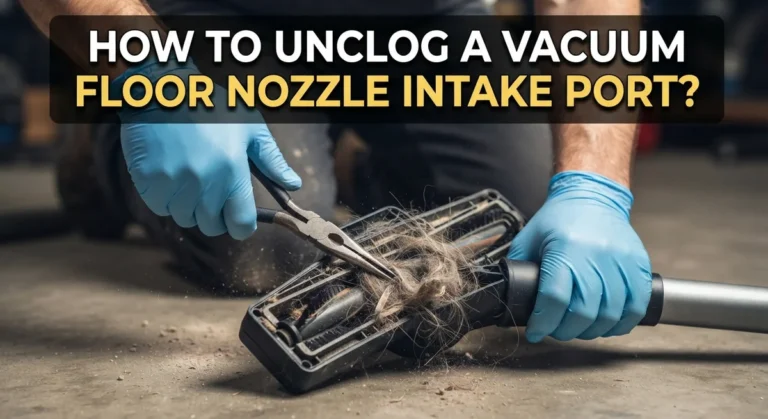
Begin with the part that touches the floor. Turn the vacuum off and unplug it. Then flip the floor head over and look closely at the nozzle opening. You are checking for packed dust, stuck hair, paper bits, pet fur, and anything that narrows the air path.
Even a small buildup here can cause poor pickup. Dirt enters through this opening first. If the opening is partly blocked, the vacuum may push crumbs around or leave them behind as you pull back. This is one of the fastest fixes in the whole process.
Use your fingers, a dry cloth, or a soft brush to remove what you can see. If there is sticky dirt, wipe it away with a slightly damp cloth and let the area dry fully. Do not use too much water around the floor head.
Pay attention to the front edge and the corners. These spots collect hair and lint. On some vacuums, debris also gets trapped where the base meets the wand or neck. That can limit airflow right where pickup starts.
Pros of this method: it is fast, free, and easy. You can do it in under five minutes. Cons: it will not solve the issue if the real blockage sits deeper in the hose or filter area.
Clean the Brush Roll So It Can Lift Dirt Again
A dirty brush roll is one of the top reasons a vacuum leaves dirt behind. Hair, thread, carpet fibers, and string wrap around the roll and slow it down. Some rolls still spin, but they lose power and grip. That weak action shows up most clearly on the backward pass.
Turn the vacuum off and unplug it. If your model allows easy access, remove the brush roll cover. Cut wrapped hair carefully with scissors. Pull it away by hand. Make sure the ends of the roll can spin freely. The goal is not just to make it look cleaner. The goal is to restore movement.
Look at the bristles too. If they are bent flat, worn short, or missing in spots, the brush roll may not be lifting dirt from the carpet well enough. That matters a lot for deep pickup.
After cleaning, spin the roll by hand. It should turn without heavy drag. If it feels stiff, there may still be debris near the end caps, or the bearings may be worn.
Pros of brush roll cleaning: it gives fast results, helps carpet pickup, and reduces strain on the motor. Cons: it can take time if hair is tightly wrapped, and worn bristles will still need repair or replacement.
If you have a hard floor setting, check that too. Some vacuums stop or slow the brush on hard floors. If that mode is on by mistake while cleaning carpet, backward pickup can be poor. A clean brush roll plus the right mode can solve a lot of dirt left behind.
Check the Belt or Brush Drive for Weak Movement
If the brush roll is clean but still weak, the next suspect is the belt or brush drive system. On many upright vacuums, a belt transfers power from the motor to the brush roll. If the belt stretches, slips, cracks, or breaks, the brush roll loses speed.
This creates a confusing problem. The vacuum still turns on. It may still pull in some dust. But it fails to lift dirt well, especially on carpet and especially on the backward pass. That weak brush action is easy to miss unless you look for it.
Check your manual if possible. Some vacuums have a visible belt area. Others have a protected brush motor instead. If your model uses a belt, inspect it for looseness, damage, or a burned smell. If your model uses a powered brush system, look for warning lights or reset buttons.
A quick clue is the feel of the vacuum. If it glides too easily on carpet and no longer gives that light brushing feel, the brush may not be working as it should. Less agitation often means less deep pickup.
Pros of checking the belt early: it helps you find a hidden mechanical problem before it gets worse. Cons: some models are harder to open, and you may need a replacement part if the belt is worn.
If the belt looks damaged, replace it rather than stretching it back into use. A tired belt rarely improves on its own. A strong brush drive helps the vacuum clean both ways, not just one way.
Clear the Hose, Wand, and Air Path Step by Step
A clog does not need to be total to cause trouble. Partial clogs are enough to reduce suction and leave dirt behind. They are common in the hose, wand, neck, lower inlet, and bend points where airflow changes direction.
Start by emptying the vacuum. Then disconnect the hose if your model allows it. Look through the hose toward a light. If the opening looks narrow or dark in the middle, there may be a clog. You can use a long blunt tool to push debris out gently. Do not use sharp metal tools that can puncture the hose.
Next, inspect the wand and the lower air path near the floor head. Pet hair clumps, paper scraps, and small toy pieces often get stuck there. On some vacuums, the clog sits where the hose meets the base. That spot is easy to miss and very common.
After clearing each section, reconnect everything firmly. Loose seals can also cut suction. If a hose clicks into place, make sure it is fully seated.
Pros of clog removal: it restores airflow fast and often fixes both pickup loss and odd motor sound. Cons: finding a partial clog can take patience because the blockage may move or hide in a bend.
A simple check helps here. Put your hand near the hose suction after cleaning the path. If airflow feels stronger than before, you are moving in the right direction. Better airflow almost always means better backward pickup.
Empty the Bin or Replace the Bag Before It Gets Too Full
A full dust bin or packed bag reduces airflow more than many users expect. Some vacuums still look half empty from the outside, but dirt can pack tightly around the cyclone, inlet, or inner walls. That slows the air stream and weakens pickup.
If your vacuum is bagless, empty the bin fully and tap out trapped dust where safe to do so. If it uses a bag, replace the bag before it reaches the hard packed stage. Waiting too long makes the machine work harder for worse results.
Check the inner parts too. Some bins have a shroud, screen, or central tube that gathers dust. If that area clogs, suction drops even though the bin does not look full. This is a very common reason for poor cleaning after a few rooms.
The backward pass often reveals this problem first. The vacuum may still grab loose dirt on the push, but it cannot finish the job on the return pass because airflow has already dropped.
Pros of this fix: it is simple, fast, and part of normal care. Cons: if you stop here and ignore filters or clogs, the problem may return right away.
As a good habit, empty the bin after each big cleaning session, not only when it looks full. If your home has pets, heavy carpet, or lots of hair, empty it sooner. Steady airflow is one of the biggest keys to keeping dirt from staying behind.
Wash or Replace Filters to Restore Strong Suction
Filters trap fine dust, but that dust also blocks airflow over time. If your vacuum leaves dirt behind, especially after a few minutes of use, dirty filters may be the reason. A clogged filter can make the motor run hotter and the suction weaker.
Check how many filters your vacuum has. Many machines have a pre motor filter and an exhaust filter. Some are washable. Others must be replaced. Follow your model guidance if you have it. In general, washable filters should be rinsed with water only and dried fully before going back in. A damp filter can cause new problems, so patience matters here.
If the filter looks gray, packed, or dusty enough to shed powder when tapped, it is overdue for cleaning. Even if the machine still runs, the air path is likely restricted. That restriction often shows up as poor pickup on thick carpet first.
Filters matter even more in homes with pets, fine dust, or frequent vacuum use. These homes load filters faster than expected.
Pros of filter care: it improves airflow, helps odor control, and reduces motor strain. Cons: drying time is slow for washable filters, and replacement filters add cost.
A smart routine is to clean or check filters before you assume the vacuum is failing. Many vacuums return to normal after this one fix. If your machine suddenly performs better after a filter clean, weak airflow was likely the root cause of the dirt left behind.
Set the Correct Height for Your Carpet or Floor
Height setting changes how close the nozzle sits to the floor. This affects both suction and brush contact. If the head sits too high, the vacuum misses dirt. If it sits too low, airflow gets choked and the vacuum can push debris or leave it behind.
On carpet, the best setting is often the one where the brush roll just touches the surface without making the vacuum hard to push. That small adjustment can change pickup more than people expect.
Test one area of carpet with two nearby settings. Use a short pass forward and a slow pass backward. If the vacuum leaves a dusty line at one setting but not the other, you have found the issue. Do this test before changing many other parts.
Plush carpet often needs a slightly higher setting than low pile carpet. Rugs may need a gentler setup so they do not bunch or drag. Hard floors usually need a different floor mode or brush setting.
Pros of adjusting height: it is quick, free, and easy to test. Cons: using the wrong setting can make cleaning worse, and some users forget to change it between rooms.
If your vacuum has no manual height control, use the floor selector if one is present. Also check for a suction gate or vent on the handle. On thick carpet, too much seal at the floor can reduce airflow. The right floor contact helps the vacuum clean on both the push and the pull.
Slow Down and Change Your Vacuuming Pattern
Sometimes the vacuum is fine and the method is the problem. If you pull the machine back too fast, the brush roll and suction may not have enough time to lift dirt from the carpet. Many users rush the return pass because it feels like a reset move, but it is often the most important cleaning stroke.
Try this pattern. Push forward at a normal speed. Then pull back at about half that speed. Overlap each pass slightly. This gives the vacuum time to work and covers dirt that sits between pass lines.
Change direction too. Vacuum one section north to south, then east to west. Dirt settles in the carpet from different angles. A cross pattern reaches more of it and reduces the chance of lines left behind. This is especially useful for pet hair and fine grit.
Use shorter strokes in dirty spots. Long sweeping movements look efficient, but they can reduce control and miss debris.
Pros of changing technique: it costs nothing, protects your machine from overwork, and often improves results right away. Cons: it takes a bit more time and may feel slower at first.
If you have always vacuumed fast, this one change may surprise you. A slower backward pass is often the easiest fix on this list. Good technique cannot repair a broken part, but it can make a healthy vacuum perform far better.
Match the Vacuum to the Type of Dirt on the Floor
Not all dirt behaves the same way. Fine dust, large crumbs, pet hair, sand, and dried leaves each move differently under a vacuum head. A machine may handle one type well and struggle with another, especially on the backward pass.
Large crumbs can roll or scatter as the vacuum moves. Pet hair can cling to carpet fibers and need extra brush action. Sand can sink deep into pile and need slow, repeated passes. If you treat all debris the same, pickup can look worse than it really is.
Try a method that fits the mess. For large dry crumbs, shorten your strokes and approach from two directions. For pet hair, use slower passes and make sure the brush roll is clean. For wall edge dirt, use the crevice tool rather than forcing the main head to do the job. The right tool often beats extra passes.
Surface type matters too. Low pile carpet is easier than plush carpet. Hard floors may need the brush off or a soft roller, depending on the machine.
Pros of matching method to debris: it improves cleaning with less frustration and fewer repeated passes. Cons: it asks you to pause and think about the mess rather than using one routine every time.
If your vacuum only leaves dirt behind in one room, the floor type or debris type may be the clue. Look at the mess itself, not just the machine.
Use the Right Attachments for Edges, Corners, and Heavy Debris
Many people keep running the main floor head over the same dirty line, hoping one more pass will fix it. In many cases, the better answer is to switch tools. The main head is made for open floor areas. It is less effective in tight edges, corners, stair seams, and baseboard lines.
If dirt stays behind near the edge of a room, use the crevice tool first. If pet hair is packed on stairs or upholstery, use the small motorized tool or fabric tool if your vacuum has one. Attachments solve specific pickup problems that the main head cannot always handle well.
For large dry debris, you may get better results by lifting the front edge slightly on the approach or using a hose tool instead of forcing the nozzle over it. This reduces the chance of pushing crumbs away on the backward stroke. A small technique shift can save a lot of repeat work.
Some users avoid attachments because they feel slower. In truth, they are often faster than ten bad passes with the wrong head.
Pros of using attachments: they improve edge cleaning, help with heavy debris, and reduce stress on the main head. Cons: switching tools interrupts the flow of cleaning, and extra tools need storage.
If your vacuum performs well in open carpet but fails near furniture or walls, the issue may not be suction at all. It may simply be the wrong tool for the spot.
Build a Simple Maintenance Routine That Prevents the Problem
The best fix is the one you do before the problem starts. A short maintenance routine keeps suction steady, the brush roll free, and the air path clear. That means better pickup in both directions and less stress on the motor.
After each big cleaning, empty the bin or check the bag. Once a week, inspect the brush roll for hair. Once every few weeks, check the hose and inlet for clogs. Clean filters on the schedule your model needs. Small maintenance beats big repair every time.
Listen to your vacuum too. A change in sound often comes before a visible drop in cleaning power. If the motor pitch changes, the airflow sounds strained, or the brush area gets louder, stop and inspect the machine. Early action saves time later.
Also watch for heat. If the vacuum feels hotter than usual, airflow may already be restricted. Do not ignore that sign.
Pros of a routine: it extends machine life, keeps pickup strong, and makes problems easier to catch. Cons: it needs consistency, and some users forget until the vacuum performs badly.
A good routine does not need to be long. Five minutes of care can prevent weeks of weak cleaning. If your vacuum often leaves dirt behind when pulled backward, the real fix may be better upkeep, not a bigger machine.
Know When a Repair or Replacement Part Makes More Sense
If you have cleaned the brush roll, cleared clogs, checked filters, emptied the bin, and tested the height, but the vacuum still leaves dirt behind, a worn part may be the real issue. Common trouble spots include the belt, brush roll, seals, hose, wheels, and floor head base.
A cracked hose can leak suction. Flattened brush bristles can stop lifting dirt. A loose base seal can reduce floor contact. A worn wheel can change the angle of the nozzle enough to affect pickup. Small wear can create a big cleaning problem.
At this stage, look at the age of the machine and the cost of the part. If the vacuum is otherwise solid, one repair may bring it back to life. If several parts are failing and the motor is weak, repair may not be the smart path. A simple cost check keeps the decision clear.
Pros of repair: lower cost than replacing the whole vacuum, less waste, and better performance if the motor is still healthy. Cons: some repairs need tools, time, or a service visit.
Choose replacement over repair if the vacuum overheats often, loses suction even after full cleaning, has repeated electrical issues, or needs several parts at once. A machine that cannot hold airflow or brush power will keep leaving dirt behind no matter how careful your technique is.
FAQs
Why does my vacuum pick up dirt when pushed forward but not when pulled back?
This usually means the vacuum has weak airflow, weak brush action, or the wrong height setting. The forward pass may loosen surface dirt, but the backward pass often finishes the deeper pickup. If that second step fails, clean the brush roll, clear clogs, empty the bin, and slow down your return pass.
Can a dirty filter really cause dirt to stay behind?
Yes. A dirty filter reduces airflow, and reduced airflow means weaker suction at the floor head. The vacuum may still run and make a normal sound, but pickup drops. This problem often shows up on carpet first because carpet needs stronger airflow and brush action than hard floors.
Is it normal for some vacuums to clean better on the backward pass?
Yes. Many vacuums do a lot of their deeper carpet cleaning on the backward stroke. That is why poor backward pickup is a sign worth checking. It often points to maintenance needs, technique issues, or a worn part rather than a random cleaning flaw.
Should I replace my vacuum if it keeps leaving dirt behind?
Not right away. Most cases come from clogs, dirty filters, wrapped hair, full bins, or wrong settings. Try the simple checks in this guide first. If the vacuum still performs badly after full cleaning and adjustment, then look at the belt, brush roll, hose leaks, or other worn parts before deciding on replacement.

Hi, I’m Ivy! I’m a smart home enthusiast and self-proclaimed clean freak who loves testing the latest cleaning tech so you don’t have to waste your money on the wrong one. I started HomeTechClean to share honest reviews and practical advice for anyone who wants a cleaner home with less effort.