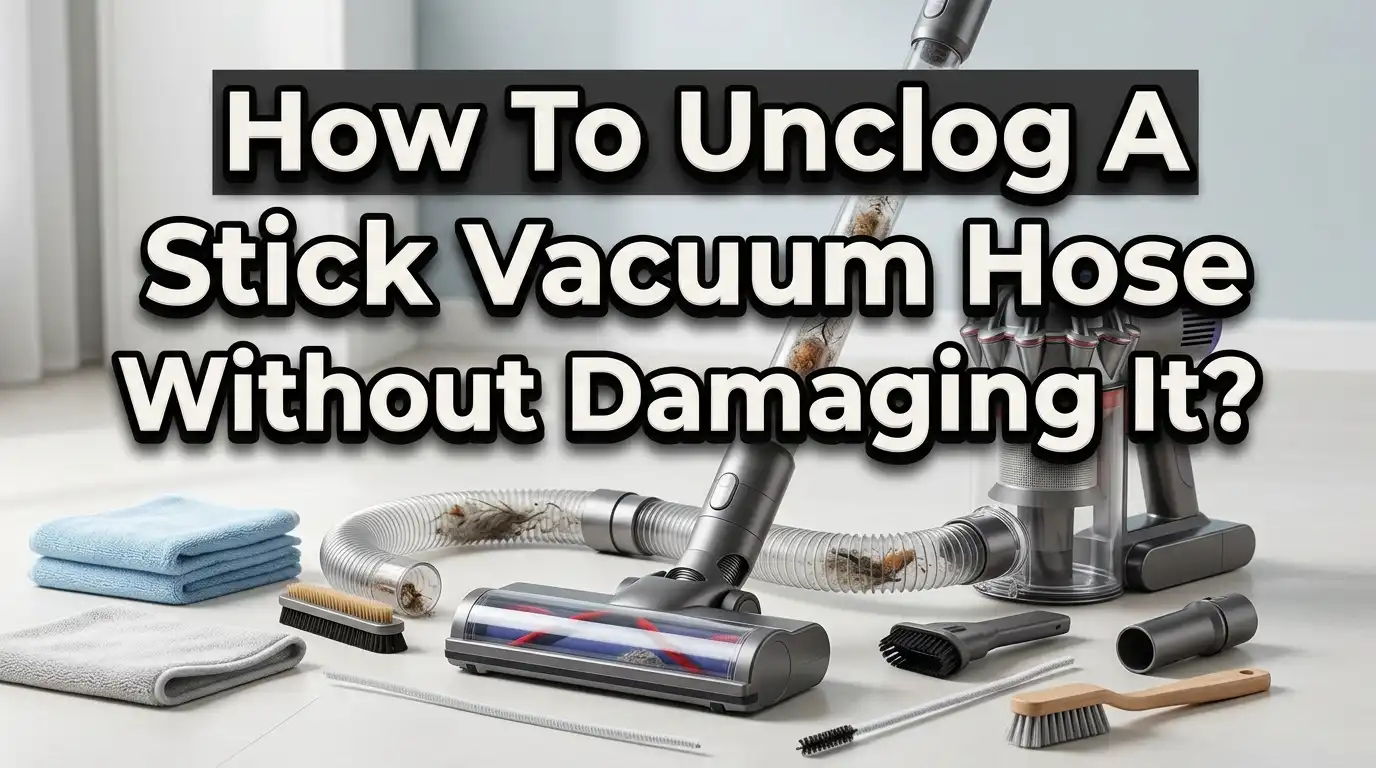
How To Unclog A Stick Vacuum Hose Without Damaging It?
A clogged stick vacuum hose is one of the most common problems homeowners face, and it can turn a simple cleaning session into a frustrating ordeal.
The good news? You can fix this yourself at home without spending money on a repair service. The tricky part is doing it without cracking, stretching, or puncturing the hose in the process.
Stick vacuum hoses are thinner and more delicate than those on traditional upright vacuums. One wrong move with a sharp tool can create a tear that kills your suction permanently.
This guide walks you through every safe method for clearing a clogged hose. You will learn what causes the clog, how to find it, how to remove it, and how to stop it from happening again.
Key Takeaways
- Always unplug or power off your stick vacuum before attempting any unclogging method. This protects both you and the motor from damage during the process.
- The broom handle method is the safest first option for most clogs. A smooth wooden handle can push out blockages without scratching or tearing the interior lining of your hose.
- Baking soda and vinegar work well for soft, compacted clogs made of dust, pet hair, and fine debris. This fizzing reaction loosens buildup without using harsh chemicals that could degrade the hose material.
- Never use sharp or metal objects with exposed edges inside a stick vacuum hose. Wire hangers, knives, and scissors can puncture the thin walls and create permanent damage to the airflow path.
- Regular maintenance prevents most clogs before they start. Emptying the dust bin before it reaches the halfway mark and checking the hose once a month will keep your stick vacuum running at full suction.
- If the clog does not move after multiple safe attempts, contact the manufacturer or a certified repair technician. Forcing a stubborn blockage can cause more harm than the clog itself.
What Causes A Stick Vacuum Hose To Clog
Stick vacuum hoses clog for several clear reasons. The most common cause is pet hair. Long strands of pet fur wrap around each other inside the hose and form dense plugs that block airflow. Over time, dust and small particles stick to this hair bundle, making it grow larger.
Small household items also cause blockages. Socks, hair ties, candy wrappers, small toys, and coins can get sucked into the hose accidentally. These items are often too large to pass through the narrow diameter of a stick vacuum hose. They wedge themselves at bends or connection points and trap everything behind them.
Fine dust buildup is another culprit. When you vacuum without emptying the dust bin regularly, airflow slows down. This reduced airflow allows fine particles to settle inside the hose walls instead of reaching the bin. Wet or damp debris makes this worse because moisture causes dust to clump and stick to the interior surface.
Vacuuming the wrong materials also leads to trouble. Construction dust, fireplace ash, and large food particles can compact inside the hose quickly. Understanding these causes helps you both fix current clogs and prevent future ones.
How To Tell If Your Stick Vacuum Hose Is Clogged
Before you start unclogging, you need to confirm the hose is actually the problem. The first sign is a noticeable drop in suction power. If your vacuum stops picking up debris that it handled easily before, a clog is likely.
Listen to your vacuum motor. A clogged hose forces the motor to work harder, which often produces a higher pitched or louder sound than normal. Some stick vacuums have indicator lights that flash or change color to alert you about blockages. Check your user manual to see if your model has this feature.
You can perform a simple visual check. Detach the hose from the vacuum body and hold it up to a light source. Look through one end. If light does not pass through clearly, something is blocking the path. You can also drop a small coin or marble through one end. If it does not fall out the other side, a blockage exists inside.
Feel along the outside of the hose with your hands. Compacted debris sometimes creates a hard lump that you can detect by touch. This also helps you locate the exact position of the clog, which saves time during removal.
Gather Your Tools Before You Start
Preparation makes the unclogging process faster and safer. You do not need expensive or specialty tools. Most of what you need is already in your home. Having everything ready before you begin prevents interruptions and reduces the temptation to use something sharp or unsafe.
Start with a long, smooth wooden stick such as a broom handle or a mop handle. This is your primary unclogging tool. Make sure it has no splinters or rough edges that could scratch the inside of the hose. Sand down any rough spots with fine sandpaper if needed.
Gather a flashlight for inspecting the hose interior. Have a bucket or large sink available for the water and cleaning solution methods. You will also want baking soda, white vinegar, and warm water for dissolving soft clogs and cleaning the hose after the blockage is removed.
Keep a pair of long nose pliers or tweezers nearby for pulling out visible objects near the hose openings. A dry cloth or towel is useful for wiping down the hose and catching debris. Wear old clothes because this process can get messy, especially if the clog involves wet dust or trapped food particles.
Step By Step: The Broom Handle Push Method
This is the most popular and safest method for removing solid clogs from a stick vacuum hose. It works best for items like socks, paper, toys, and compacted hair balls that are physically blocking the airflow path.
Step 1: Turn off your vacuum and remove it from the charger. Disconnect the hose from both ends of the vacuum body. Most stick vacuums have release buttons or twist locks at the connection points.
Step 2: Lay the hose out straight on the floor. Avoid twists or bends that could hide the clog’s location. Shine a flashlight through one end to locate the blockage.
Step 3: Insert the broom handle slowly into the hose from one end. Push gently and steadily. Do not ram or jab the handle. You should feel resistance when you reach the clog. Apply firm but controlled pressure to push the blockage through and out the other end.
Step 4: Once the clog exits, inspect the hose again with your flashlight to confirm the path is clear. Reattach the hose and test the suction.
Pros: This method is free, fast, and requires no chemicals. It works on most solid blockages and carries a low risk of hose damage when done carefully.
Cons: It does not work well for soft, sticky clogs that smear along the hose walls. Very long hoses may be difficult to reach with a standard broom handle. There is a small risk of pushing the clog deeper if the angle is wrong.
Step By Step: The Baking Soda And Vinegar Method
This method targets soft clogs made of compacted dust, pet hair, and fine debris. The chemical reaction between baking soda and vinegar creates a fizzing action that breaks apart and loosens these materials without scrubbing.
Step 1: Detach the hose from your stick vacuum completely. Make sure no electronic components are attached to the section you will be cleaning.
Step 2: Hold the hose vertically. Pour half a cup of baking soda into one end and shake gently to distribute it along the interior.
Step 3: Pour two cups of white vinegar into the same end. The mixture will start fizzing immediately. This is normal and safe. The fizzing action lifts and dissolves the clog material.
Step 4: Let the solution sit for 15 to 20 minutes. After waiting, rinse the hose thoroughly with warm water. Hold it vertically over a bathtub or sink and run water through both ends until it comes out clean.
Step 5: Shake out excess water and hang the hose in a well ventilated area. Let it dry completely before reattaching it to your vacuum. Using a damp hose can damage the motor or cause mold growth.
Pros: This method is cheap and uses common household items. It cleans and deodorizes the hose at the same time. The ingredients are non toxic and safe for most hose materials.
Cons: It does not remove solid objects like socks or coins. Drying time can take several hours, which means your vacuum is out of commission. Some hoses should not be exposed to water, so check your manual first.
Step By Step: The Warm Water Flush Method
A warm water flush works well for clogs caused by sticky residue, wet dust, or fine debris that has compacted along the hose walls. This method is straightforward and effective for maintenance cleaning too.
Step 1: Remove the hose from the vacuum. Confirm that your hose is safe for water exposure by checking the manufacturer’s guidelines. Most detachable stick vacuum hoses can handle water.
Step 2: Take the hose to a bathtub or outdoor faucet. Run warm water through both ends at moderate pressure. Do not use hot water because extreme heat can warp or soften certain plastic and rubber hose materials.
Step 3: Hold the hose in a U shape and slosh the water back and forth. This motion helps dislodge debris that clings to the ridged interior walls. You will see dirty water draining out as the buildup loosens.
Step 4: Continue rinsing until the water runs clear. Shake the hose well to remove trapped water. Hang it to dry completely before use.
Pros: This method is gentle on the hose and requires no tools or chemicals. It flushes out fine dust that other methods miss. It is fast to perform, though drying takes time.
Cons: It cannot remove solid objects lodged in the hose. The hose must dry fully before use, which takes several hours or overnight. Not all stick vacuum hoses are waterproof, so verify before attempting.
Using A Wire Hanger Safely
Some people reach for a wire hanger to pull out clogs. This method can work, but it carries the highest risk of damage if done incorrectly. The key is proper preparation and gentle technique.
Step 1: Unwind the wire hanger and straighten it as much as possible. Create a small, smooth loop or hook at one end. This hook catches objects without poking through the hose walls. Wrap the hook end in a small piece of tape or cloth to soften it.
Step 2: Remove the hose from the vacuum. Insert the hooked end slowly into the hose opening. Rotate the wire gently as you push it forward to feel for the clog.
Step 3: When you contact the clog, try to hook or snag it. Pull slowly and steadily. Do not twist aggressively or yank with force. If the clog resists, try approaching from the other end of the hose.
Step 4: Once the object is out, inspect the hose interior for any scratches or punctures. Run your fingers along the outside while shining a light inside to check for damage.
Pros: This method can retrieve specific lodged items like socks, hair ties, or fabric. The hook shape allows you to grab objects that a broom handle would just push further in.
Cons: Wire edges can scratch, puncture, or tear the hose lining. This is the riskiest method on this list. It requires patience and a careful touch. If the hook catches a hose ridge, it can pull the hose apart internally.
Using Another Vacuum To Suck Out The Clog
This creative method uses a second vacuum cleaner to pull the blockage out using suction power. It works especially well for clogs that sit deep inside the hose where manual tools cannot reach easily.
Step 1: Detach the clogged hose from your stick vacuum. Lay it flat on the floor with one end pointing at you.
Step 2: Take a second vacuum cleaner, ideally a shop vac or an upright vacuum with a hose attachment. Press the nozzle tightly against one end of the clogged hose to create a seal.
Step 3: Turn on the second vacuum. The strong suction should pull the clog out through the end. You may need to reposition the seal or try the other end of the hose if the clog does not budge right away.
Step 4: Once the blockage is out, inspect the hose and test it by reattaching it to your stick vacuum.
Pros: This method is completely hands off inside the hose, which means zero risk of internal scratching or puncturing. It can remove both soft and solid clogs. No water or chemicals are involved, so there is no drying time.
Cons: You need access to a second vacuum cleaner. The suction from a standard vacuum may not be strong enough for tough clogs. Creating a proper seal between the two hoses can be tricky.
What To Do If The Hose Is Not Detachable
Some stick vacuum models have hoses that are integrated into the body and cannot be easily removed. This makes unclogging more difficult but not impossible. You just need to adjust your approach.
Start by checking your user manual for disassembly instructions. Many hoses that seem fixed actually have hidden release clips or screws that allow partial removal. Look near the handle connection and the base connection for small buttons or tabs.
If the hose truly cannot be detached, use the broom handle method from the accessible end. Insert it through the opening where the hose meets the cleaning head or the dust bin. Push gently and check frequently to make sure you are not bending the hose at sharp angles.
Another option is the reverse suction method. Blow compressed air through one end of the hose while holding the other end over a trash bin. Short bursts of air at moderate pressure can dislodge soft clogs. Avoid high pressure air tools because they can rupture the hose seams.
For non detachable hoses, the second vacuum method is often the best choice. Press the nozzle of another vacuum against the accessible hose opening and let suction do the work. This avoids the need to insert any tools into a hose you cannot fully see or reach inside.
Mistakes That Damage Stick Vacuum Hoses
Knowing what to avoid is just as important as knowing what to do. The most common mistake is using sharp objects to probe inside the hose. Knives, scissors, screwdrivers, and unpadded wire can all puncture or slice the interior lining.
Another frequent error is using excessive force with any tool. Ramming a broom handle aggressively can crack the hose at connection points or stretch the material. Always push gently and increase pressure gradually.
Using boiling or very hot water is a mistake that warps the hose material. Stick vacuum hoses are often made of lightweight plastic or thin rubber that softens at high temperatures. Always use warm or room temperature water for flushing.
Reattaching a wet hose to the vacuum is a serious error. Moisture inside the hose can reach the motor and cause electrical damage or short circuits. It can also create a breeding ground for mold and bacteria. Always let the hose dry completely before reassembly.
Forcing the vacuum to run with a partial clog is another damaging habit. This overworks the motor and can burn it out. If suction is weak, stop vacuuming immediately and investigate the cause before continuing.
How To Deep Clean Your Stick Vacuum Hose After Unclogging
Once the clog is removed, a deep clean ensures no residue remains inside. Leftover debris can quickly form a new clog if you skip this step. Deep cleaning also removes odors caused by trapped dust, pet hair, and moisture.
Start by rinsing the hose with warm water as described in the warm water flush method. After rinsing, prepare a cleaning solution with half a cup of baking soda and two cups of white vinegar. Pour this through the hose, let it fizz for 15 minutes, and rinse again until the water runs clear.
For stubborn odors, add a few drops of dish soap to warm water and swish it through the hose. The soap cuts through greasy residue that plain water and vinegar might miss. Rinse thoroughly after using soap to prevent a soapy film from collecting dust later.
After washing, shake the hose vigorously to remove trapped water droplets. Hang it over a shower rod or clothesline with both ends pointing down so gravity pulls water out. Let it air dry for at least four to six hours, or overnight for best results. Once dry, reattach the hose and run the vacuum for 30 seconds to clear any remaining loose particles.
How Often Should You Check Your Stick Vacuum Hose
Regular inspection prevents clogs from forming and catches small problems early. A quick visual check once a month is a good habit for most households. If you have pets or vacuum frequently, increase this to every two weeks.
During each check, detach the hose and look through both ends with a flashlight. Feel along the exterior for any hard lumps that signal debris buildup. Drop a coin through the hose to test for hidden blockages. If the coin passes through freely, the hose is clear.
Deep clean the hose with the baking soda and vinegar method every one to two months. This removes gradual buildup that visual inspections might miss. It also keeps the interior fresh and prevents odor problems.
Check the hose connection points each time you inspect. Loose connections allow air leaks that reduce suction and encourage debris to settle in the hose. Make sure all clips, seals, and twist locks are secure and undamaged. Replace worn gaskets or seals promptly.
Keeping a simple maintenance log can help. Note the date of each inspection and cleaning. This pattern helps you predict when clogs are most likely and adjust your cleaning schedule accordingly.
Tips To Prevent Future Hose Clogs
Prevention saves time and extends the life of your stick vacuum. The easiest prevention step is emptying the dust bin regularly. Never let it fill past the halfway mark. A full bin reduces airflow and pushes debris back into the hose.
Pick up large items by hand before you vacuum. Socks, coins, paper clips, and small toys should never enter the vacuum. Make it a habit to scan the floor before you start cleaning. This simple step eliminates the most common causes of solid hose clogs.
Keep the brush roll clean and free of wrapped hair. A tangled brush roll restricts airflow at the cleaning head, which changes the air pressure inside the hose and promotes clogs. Trim wrapped hair from the brush roll with scissors after every few uses.
Avoid vacuuming wet or damp surfaces with a standard stick vacuum. Moisture causes dust to clump inside the hose and stick to the walls. If you need to clean a wet spill, use paper towels first and vacuum the area after it dries.
Check and clean or replace your vacuum’s filter according to the manufacturer’s schedule. A dirty filter chokes airflow throughout the entire system, including the hose. Clean filters keep suction strong and debris moving in the right direction.
When To Replace The Hose Instead Of Unclogging It
Sometimes a hose is beyond saving. Visible cracks, holes, or tears mean the hose needs replacement, not repair. Even small punctures cause air leaks that destroy suction performance, and tape fixes are temporary at best.
If the hose has permanent kinks that restrict airflow, replacement is the better option. Kinks weaken the hose wall over time. A hose that kinks repeatedly in the same spot has a structural weakness that will only get worse.
Stretched sections are another sign of a failing hose. If part of the hose has a wider diameter than the rest, it will catch debris and clog more easily. This stretching usually results from aggressive unclogging attempts or normal wear over years of use.
Persistent odors that survive deep cleaning may indicate mold or bacteria growth inside the hose walls that cannot be reached by normal cleaning methods. In this case, replacing the hose protects your indoor air quality.
Contact the manufacturer for a compatible replacement hose. Using the correct size and model ensures a proper fit and maintains the vacuum’s suction performance. Off brand replacements may not seal correctly, which creates new airflow problems.
Frequently Asked Questions
Can I use a pressure washer to unclog my stick vacuum hose?
No, a pressure washer is too powerful for stick vacuum hoses. The extreme water pressure can split seams, puncture the hose lining, or stretch the material permanently. Stick to a standard faucet at moderate water pressure. Gentle water flow combined with the baking soda and vinegar method is more than enough to clear soft clogs safely.
How long should I wait for the hose to dry after a water based cleaning?
Allow a minimum of four to six hours of air drying in a well ventilated space. Overnight drying is ideal. Hang the hose with both ends pointing downward so gravity removes trapped water. Never use a hair dryer or heat source to speed up drying, as heat can warp lightweight hose materials.
Will unclogging the hose void my vacuum’s warranty?
Basic hose cleaning and unclogging typically do not void warranties. However, opening sealed components or using chemicals not approved by the manufacturer could be an issue. Check your warranty terms before attempting any method that involves disassembling parts beyond the detachable hose. Save your receipt and warranty documentation just in case.
What if I can hear the clog but cannot reach it?
If the clog is stuck in a deep bend that no tool can reach, try the reverse suction method with a second vacuum. You can also try holding one end of the hose tightly against your palm and shaking the hose vigorously. The combination of air pressure changes and physical motion can shift the blockage to an accessible location.
Is it safe to use bleach to clean the inside of my vacuum hose?
Bleach is not recommended for most stick vacuum hoses. It can degrade plastic and rubber materials over time and weaken the structural integrity of the hose. White vinegar is a much safer disinfecting option. It kills bacteria effectively without the corrosive effects of bleach, and it rinses out cleanly without leaving harmful residue.
How do I know if the clog is in the hose or somewhere else in the vacuum?
Detach the hose and test the vacuum without it attached. If suction returns to normal at the vacuum body, the hose is the problem. If suction remains weak, the clog may be in the dust bin area, the filter, or the brush roll. Check each component individually to isolate the issue before assuming the hose is blocked.

Hi, I’m Ivy! I’m a smart home enthusiast and self-proclaimed clean freak who loves testing the latest cleaning tech so you don’t have to waste your money on the wrong one. I started HomeTechClean to share honest reviews and practical advice for anyone who wants a cleaner home with less effort.